Beholding December: A Season of Stillness, Memory, and Gentle Light

As December arrives, I am reminded that the final month of the year often holds a unique mixture of tenderness and truth. The world around us grows quieter—winter skies fade earlier into darkness, cold air encourages us inward, and nature itself pauses, resting in a kind of holy stillness.

Beholding—a word that invites us not just to see, but to witness with intention. To behold is to pause long enough for awareness to surface. It asks us to approach ourselves, our memories, and the present moment with an open, steady gaze. And perhaps more importantly, it asks us to allow what is to be enough.

For many who are grieving, this quiet can feel comforting or confrontational. Sometimes both. The end of the year can carry with it the weight of memory for those carrying loss. December can stir up an ache of what is missing. There is a particular kind of poignancy to traditions we can no longer share, to rituals that now feel altered, to the placeholders at the table and the conversations left unfinished. Grief has a way of sharpening the contrast between what once was and what now is.

Turning towards Nature as the year draws to a close allows us to see that the natural world mirrors the emotional landscape of grief, and helps us positively focus. The earth is bare and resting, stripped of excess. Trees stand in their truth without foliage to hide behind. Winter does not rush. It waits, holds, breathes.

Yet, within that contrast, there is also the possibility of beholding—of lifting our eyes gently toward the moments of meaning still available to us.

Not to fix anything.
Not to force gratitude.
But simply to notice.

I like to focus on the strength and resilience of the evergreens—their majestic presence reminding us that even in the darkest, coldest months, life endures with quiet courage. The holly is another small miracle that arrives in the winter, with its glossy deep green leaves, bright red berries, and a presence that feels both protective and symbolic. Traditionally, holly has represented resilience and the promise of hope during the darkest time of the year. Its berries stand out against a barren landscape, reminding us that color and life exist even when the world feels cold and stripped down.

For caregivers and grievers alike, holly and evergreens can offer a tender lesson that even in deep dormancy, there can be signs of life worth beholding.

Its sharp, protective leaves also echo something true about grief. Loss teaches us boundaries. It teaches us to shield what is tender. And it teaches us that even the smallest burst of color—a memory, a breath of appreciation, a moment of warmth—can carry us through a difficult season.

Another thought to consider is the Essential Oil of the Month for December – Magnolia. Magnolia, with its soft, floral embrace, carries an energy of compassion and tranquility. Its aroma encourages us to soften the edges of our internal world, especially when grief feels jagged. Magnolia teaches the art of gentleness, both toward ourselves and the emotions that rise in December’s quiet reflection.

Paired with our focus of Beholding, magnolia offers an invitation: allow yourself to stand still long enough to sense the comfort that is available. Not the comfort that erases grief—but the comfort that accompanies it. In moments of overwhelm, inhaling magnolia can feel like placing a warm hand on the heart, reminding us that we are allowed to slow down and receive support.

Some last thoughts for this month’s focus: Beholding as a Practice with Loss does not require perfection. It simply requires presence. In your moments of heaviness this month, you may consider practicing the art of beholding in small, manageable ways:

  • Behold a memory—not to change it, but to honor it.
  • Behold the natural world—winter’s quiet landscapes often reflect our inner terrain.
  • Behold your breath—especially when emotion constricts the chest.
  • Behold small glimmers of warmth—a light in a window, a cup of tea, a bird perched on a bare branch.
  • Behold your own resilience—even if you don’t feel resilient in the moment.

Grief slows us down, sometimes against our will. Nature, in December, does the same. Both invite us into a slower, more reflective rhythm. Think of this thought as an invitation to let your gaze soften. Let your awareness rest on what is here—not what could have been or what should have been, but what is unfolding quietly in front of you.

And as holly brightens the winter landscape and magnolia calms the weary heart, may you find a gentle space to rest within yourself—trusting that this season, like all seasons, carries its own kind of wisdom.

Written by Lisa Story, MSCP, LPC, CT
Founder of Hope Grows

Focus of the Month: Beholding
Essential Oil: Magnolia
Flower: Holly

Re-membering — Finding Our Way Back to What Still Belongs

November ushers in a profound shift. The days grow shorter, darkness lingers longer, and the cold begins its slow settling in. For many who are grieving, this seasonal descent mirrors the inner landscape of loss. We become aware of what has been taken, what feels missing, and what life has made painfully out of place. Loss, in many ways, dis-members us—pulling apart what once felt whole, steady, or deeply anchored in love.

But November, with its gentle cultural invitation to gather, to reflect, to break bread, and to give thanks, offers another path forward. The path of Re-membering. Not remembering, as in merely recalling memories, but Re-membering, as the opposite of dismembering: bringing back together the parts of our story, our identity, and our love – ours still to keep.

When the Heart Can’t Look Back (Yet)

In the early throes of grief, memory can feel unbearable. I worked with a male client who lost the love of his life. The photographs of their travels, the souvenirs of family adventures, and the once-treasured albums sat untouched. He asked me through tears, “Will I ever be able to look at these again?” In that season, he could not. The memories brought searing pain, not comfort. He judged himself for it, wondering why love had become so intolerable to look at.

The truth is this: in early grief, protecting ourselves is not avoidance—it’s survival. With time, compassion, and gentleness, shifts. Months later, he told me he sat down with those same albums, this time with a candle lit beside him. He smiled. He cried. He paused. He continued. But he could look. The memories, he said, “came back like warm waves instead of cold knives.” This is Re-membering—when the story becomes integrated again, and love, not shock, sets the tone.

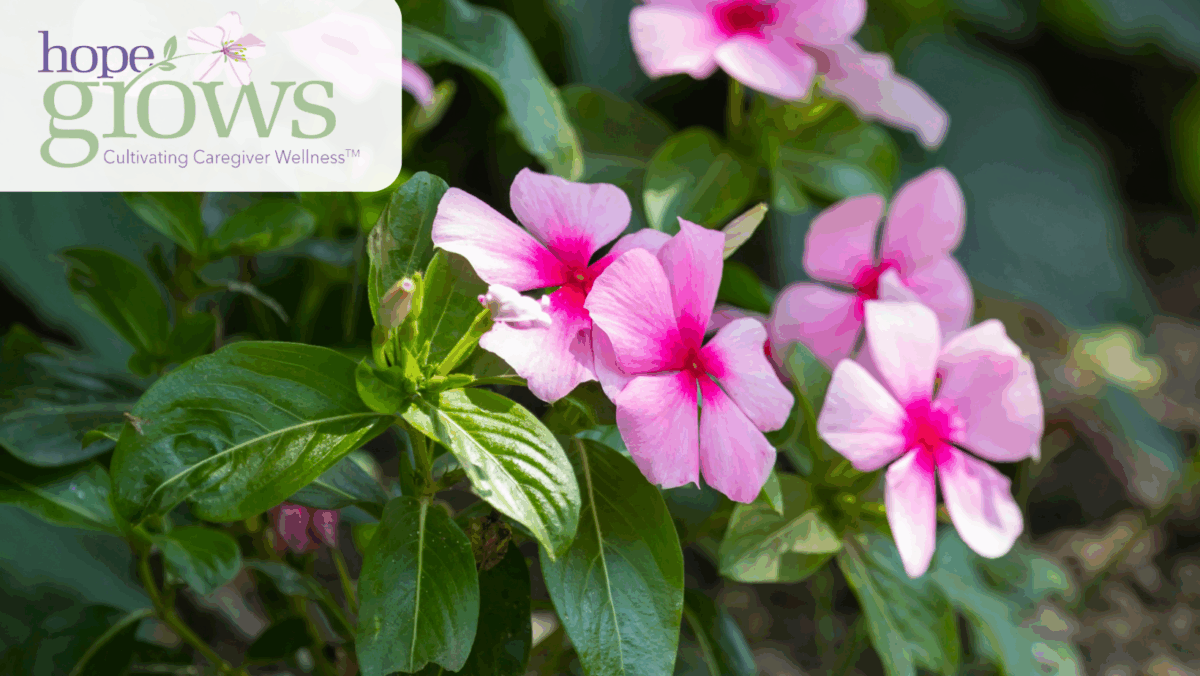
The Role of Nature and the language of plants is something we incorporate in our model of care. Periwinkle is the flower for the month and has long symbolized fidelity, everlasting love, and spiritual connection. Its evergreen nature reminds us that some bonds—especially those forged in deep love—do not die. Even in the coldest months, its presence whispers, “what is rooted in the heart remains.”

Bringing periwinkle imagery, dried flowers, or watercolor art into your space can act as a gentle anchor during November. Nature not only reflects where we are—it helps guide us to what’s next.

Another grounding companion is the doTERRA Balance® Essential Oil. For those grieving, grounding is essential. The doTERRA Balance® blend, with its steady, wood-forward aroma, offers emotional centering when life feels unmoored. A drop to the wrists, over the heart, or on the bottoms of the feet can support the nervous system and create space for calmer breathing, emotional stability, and greater connection to the present moment. When we are grounded, we are more capable of Re-membering gently, without drowning in the past or bracing against it.

The November heart can bring gratitude and giving. It brings thanks-giving—not just as a holiday, but as a posture. Gratitude does not erase grief, but it can coexist with it. Neuroscience shows that giving thanks and engaging in altruism can increase serotonin and dopamine levels, elevating mood and nurturing a sense of meaning and connection. When we give of ourselves—especially while grieving—we momentarily step out of our pain and into purpose.

Some of the most healing practices in November can include:

  • Writing one simple gratitude each day.
  • Helping someone anonymously.
  • Sending a card to a caregiver, widow, or grieving friend.
  • Volunteering, even in a small capacity.
  • Sharing a meal or donating one.

Altruism helps stitch the heart back together. It reminds us: We still matter. We can still contribute. We are still connected.

As we transition into the giving season and the colder start of the change of season, may you Re-member what is still yours, ground yourself with breath, earth, and calming aromatherapy, honor memories at a pace that is gentle, not forced, receive the symbols of nature as teachers and companions, and give and give thanks, not to bypass grief, but to let light in.

As winter approaches, may you find that what once felt broken can become rearranged—not as it was before, but as something whole in a new way. Love remains. You are still here. Your story continues, and it still deserves warmth, connection, and peace.

Written by Lisa Story, MSCP, LPC, CT
Founder & Clinical Director

Focus of the Month: Re-membering
Essential Oil: Balance
Flower: Periwinkle