

Laughter

E.E. Cummings said, “The most wasted of all days is one without laughter.” What a great focus for September, along with a fabulous topic for discussion. September for me is all about the change of seasons, students and teachers returning to school, and the beginning of harvest time. My hope is that not only for myself, but for everyone to find the integration of laughter in their daily lives this month.

Laughter is a universal human behavior that involves the rhythmic contraction of muscles, typically resulting in sound and sometimes tears. It plays a significant role in social interactions, communication, and emotional expression. Moreover, laughter has been linked to various health benefits, both physical and psychological. Some ways in which laughter can help with our health:

· Stress reduction

· Pain management

· Immune system boost

· Cardiovascular benefits

· Muscle relaxation

· Social bonding

· Coping mechanisms

· Mood enhancement

· Cognitive benefits

· Enhanced quality of life

Wow! With that many health benefits, who wouldn’t want to laugh?! It’s worth noting that not all laughter is the same. Genuine laughter, often referred to as “real” or “spontaneous” laughter, is more likely to produce these positive effects compared to forced or fake laughter. Additionally, humor is subjective, and what may be funny to one person might not be amusing to another.

While laughter has numerous health benefits, it’s important to remember that it’s not a substitute for professional medical treatment when needed. However, integrating humor and laughter into your daily routine can contribute to a more positive and resilient mindset, which can have a positive impact on your overall health and well-being.

Caregivers often have demanding and challenging roles, and they may find it difficult to prioritize self-care, including laughter. However, we can incorporate a message from Dr. Seuss: “From there to here, and here to there, funny things are everywhere.” Incorporating laughter into our lives can have positive effects with the quality of care we provide. Some helpful tips to find moments of joy and laughter include:

· Acknowledge the importance of laughter

· Create opportunities for laughter

· Share laughter

· Connect with others

· Practice mindfulness

· Use humor as a coping strategy

· Stay open to playfulness

· Incorporate laughter into routine

· Practice gratitude

· Lead by example

· Seek support

Remember that laughter doesn’t have to be forced or contrived; however, trying integrative therapies for laughter can be valuable. As a therapeutic tool, laughter as therapy can promote physical, emotional and psychological well-being. These therapies aim to harness the benefits of laughter in a structured and intentional way. Some examples include:

· Laughter yoga

· Humor therapy

· Comedy and improv workshops

· Laughter meditation

· Laughter clubs

· Laughter wellness

· Humor in therapy

· Laughter retreats

· Online laughter sessions

It’s important to note that integrative therapies involving laughter are not a replacement for medical treatment when necessary. These therapies are meant to complement traditional healthcare approaches and promote holistic well-being. Before participating in any integrative therapy, individuals should consult their healthcare providers, especially if they have underlying medical conditions or concerns.

In researching the topic of laughter, I was glad to see so many interesting ways in which laughter can be used and the impact it can have. I will leave you with once last thought: with the concept of nature, “laughing” is often used metaphorically to describe the beauty, vitality, and joyful aspects of the natural world. It is a poetic way to express the idea that nature can evoke feelings of happiness, awe, and wonder. I will save the ways in which the metaphorical “laughter of nature” can be understood for our upcoming Celebrating You! caregiver event being held on November 8, 2023.

Until then, laugh, laugh, and laugh!
Temptation

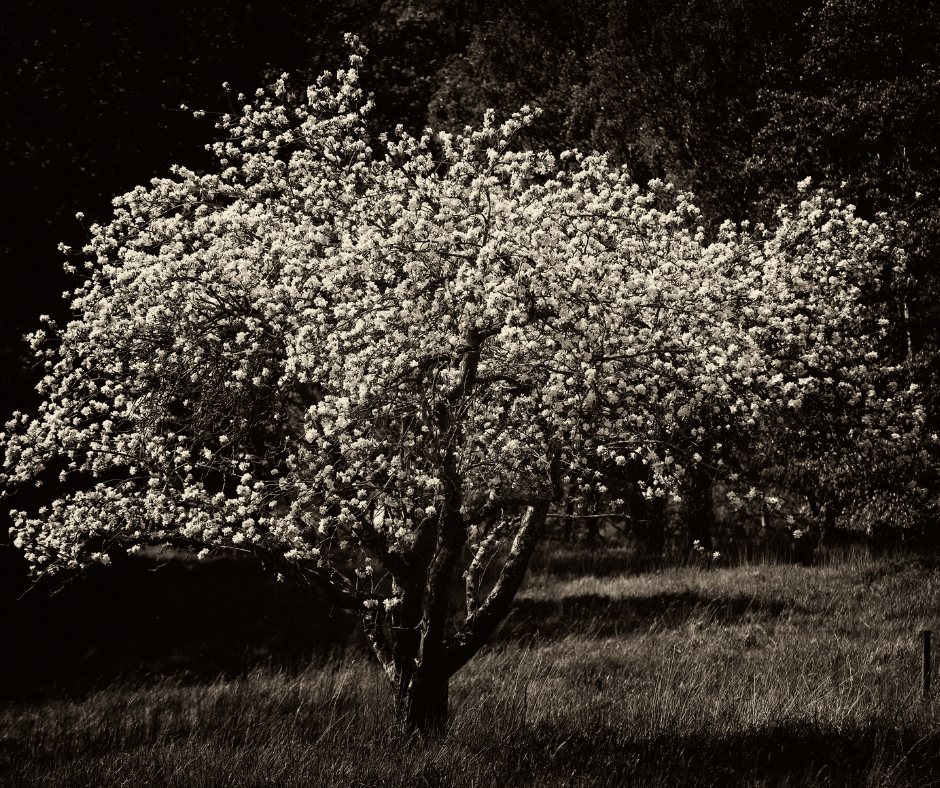
The focus for the month of August is Temptation. The focus was chosen due to the apple trees bearing fruit at this time of year, with harvest soon to follow. Autumn season is fast approaching at the Iris Respite House & Healing Gardens, as the squirrels begin to gnaw at the hickory nuts in the tree next to the Hope Grows administrative offices on the property.

What do apples have to do with temptation? Well, for starters, the Victorian era of representation tells us that the apple tree symbolizes temptation. From some religious accounts and beliefs, temptation is heavily rooted in the Old Testament story of Adam and Eve, whereby the devil enticed Adam and Eve to eat the forbidden fruit from the Tree of Knowledge.

According to the story of the golden apples in the Garden of Hesperides, the unnamed fruit became the apple. From then on, it became a symbol for knowledge, immortality, temptation, and the fall of man and sin.

Is it not, though, that temptation refers to the desire or inclination to do something that is often seen as wrong, forbidden, or detrimental? It’s a psychological and emotional state where individuals are drawn to actions that might provide immediate pleasure or gratification but can have negative consequences in the long run. Temptation can be linked to various aspects of human behavior, such as personal ethics, self-control, and decision-making.

How does this interconnect with caregiving? We all know that individuals providing care to others contributes to the breakdown of our overall health. There is proven research with this, and the many caregivers for whom Hope Grows provides support share with us that they are struggling with overall wellness. The role of a caregiver is emotionally, physically, and mentally demanding, which, in turn, can lead some to various forms of temptation that can impact their overall health.

The suggestions below have been introduced as things to be mindful about. I am hoping you will consider these as encouragement to pay attention and not ignore, as taking heed can avoid temptations.

Stress and Coping: Caregiving can be stressful due to the constant responsibilities, long hours, and the emotional toll of witnessing a loved one’s or patient’s suffering. In times of high stress, caregivers might be tempted to engage in unhealthy coping mechanisms, such as overeating, smoking, or excessive alcohol consumption, which can negatively affect their health.

Self-Care Neglect: Caregivers often prioritize the needs of those they care for, neglecting their own well-being in the process. This temptation to put others first and neglect self-care can lead to burnout, fatigue, and declining physical health.

Lack of Time: Caregivers may struggle to find time for their own needs and activities. This lack of time might lead to temptation for unhealthy habits, like skipping meals, not getting enough exercise, or not getting enough sleep, all of which can adversely impact their health.

Emotional Strain: Witnessing the suffering or gradual decline of a loved one can be emotionally challenging. Caregivers might be tempted to suppress their emotions or avoid seeking support, leading to mental health issues like depression or anxiety.

Financial Stress: Caregiving can also lead to financial strain, especially if it affects the caregiver’s ability to work or requires additional expenses for medical care. Financial pressures can lead to temptation for risky financial decisions or unhealthy coping mechanisms.

Social Isolation: Caregivers may become socially isolated as their caregiving duties consume most of their time and energy. This isolation can lead to feelings of loneliness and further temptations for unhealthy behaviors as they lack support and social interactions.

Guilt: Caregivers may feel guilty about taking time for themselves or seeking help from others. This guilt can create temptation to avoid self-care and focus solely on the care receiver, which can have detrimental effects on their health.

It is essential for caregivers to recognize the challenges they face and prioritize their own well-being. Seeking support from friends, family, or support groups can help alleviate some of the emotional burden. Establishing a routine that includes time for self-care, exercise, and relaxation is crucial for maintaining good health. Additionally, seeking professional help, such as counseling or therapy, can be beneficial in managing stress and emotions.

Overall, being aware of the temptations and challenges, and taking proactive steps to address them, is vital for maintaining caregiver health. Consider Hope Grows for your caregiver support. Call us at 412-369-HOPE (4673) extension 101, email [email protected], or fill out the Caregiver Sign-Up Form here on our website.

Liberty

When I think of liberty and all that comes with that word, I think of July 4th, fireworks, and our freedoms in the United States. I also think about the brave men and women who died to give us that right. Our focus for the month of July is liberty. We spent the month talking about ways in which caregivers can have liberty to implement care for self.

By definition, liberty refers to “the freedom to make choices and pursue activities that align with one’s values, goals, and preferences.” When there is no freedom to live our lives according to our own desires, it contributes negatively to our emotional well-being. Having the ability to make choices and have autonomy fosters a sense of control, self-determination, and fulfillment.

George Washington once said, “Liberty, when it begins to take root, is a plant of rapid growth.” I can see why George Washington said this; the United States is an example of rapid growth of liberty and freedoms since the founding of our country. Humanity and society were able to foster positive emotional well-being; be all you can be was the result.

Who doesn’t want that kind of liberty and freedom? It is pretty clear the reason so many people are migrating here: to partake in the positive emotional benefits of being able to make choices and have autonomy.

George Bernard Shaw once said, “Liberty means responsibility. That is why most men dread it.” I recently saw a news channel segment of a New York neighborhood with 100,000 immigrants living in a hotel with overflow onto the streets. How is this liberty? Was the country they came from so awful that living on the street is better? I think about a quote from Abraham Lincoln, “Those who deny freedom to others deserve it not for themselves.” I question who is responsible for denying these immigrants the choice to pursue the liberties in their native country and should it not be the financial responsibility of their native country? To help this situation that is now a responsibility to the communities within our country?

We can argue immigration policies to death, regardless of the political side, but the point remains; the amount of people immigrating here are becoming the responsibility of communities, leaving many members of society without a sense of control.

I digress this month with a tirade of libertarian thoughts and it comes with no apologies as I am merely questioning the responsibility of the recent immigration surge. None the less, liberty and all that it means is relatable to caregiving and care receiving. Communities bearing the responsibility are now being the caregivers of the immigrants receiving support.

By embracing our freedom to engage with nature and recognizing our reciprocal connection, we can experience a greater sense of liberty, find solace and rejuvenation in nature, and contribute to the well-being of the environment and ourselves.

Moving forward with the importance of liberty, managing the caregiver stress in those communities and fostering emotional connections is most likely needed. Hopefully, someone is helping those communities with self-care so they can contribute to improved emotional well-being, because, after all, “liberty is the breath of life to nations.” ~ George Bernard Shaw

The Art of Letting Go: Balancing Expectations in Caregiving and Lessons from Nature

In the month of June, the ThinkCaregiver™ program and its Simple Suggestions talked about expectations and all it can ensue. We started the month off with the quote by Debra L. Reble, “We must let go of any expectations of how life should be, in order to experience how life can be.” Quite profound and very relatable to nature and all things caregiving.  

Nature is a vast and intricate system that has evolved over billions of years. It offers numerous lessons and inspirations for all of us and, as I have said in the past, has a reciprocity that closely connects to the give and take of living and caring.

Caregiving, as I have said and advocated before, involves support, assistance, and nurturing to those who require help due to an age-related disease, a chronic illness, a physical or mental disability, childhood special needs, veterans, and other circumstances. While caregiving can be fulfilling and meaningful, it can drain one physically, emotionally, mentally and spiritually. Not too mention, it can drain us financially and of our career that one has worked very hard to achieve.

One does not go into helping someone at the most vulnerable times of their lives with the expectation that they are going to be drained of so much. Although I believe it is natural to have expectations once someone is the role of caregiving, sometimes it is best to put them aside. Once put aside, the result can indeed be helpful.

Reduced stress and frustration are at the top of the list of reasons. An increase in becoming adaptable, having improved emotional well-being, a greater dynamic in the relationship and an easier time at living in the present moment. I think it is important to point out that letting go of expectations does not mean abandoning goals or ceasing to care, it is more about cultivating a mindset of acceptance and compassion. In doing this, one can focus on providing the best care possible while recognizing and appreciating the uniqueness of each situation and individual journey.

In addition, setting aside expectations can help one to strike a balance. It’s still important to have realistic goals, seek appropriate support, and maintain a level of structure and planning in caregiving, however, finding a middle ground between letting go of rigid expectations and maintaining a proactive and organized approach can help caregivers navigate their roles effectively.

Nature can help with this. It offers a multitude of expectations and lessons. By observing and learning from nature, we can develop a greater understanding of our place in the world and foster a more harmonious relationship with both the natural environment and each other. Consider one or more of those lessons.

Ebb and Flow

The ebb and flow of life is a natural cycle that is closely interconnected with the rhythms of nature. Just as the tides of the ocean ebb and flow, so too does life go through periods of growth, change, and renewal.

Nature provides a powerful metaphor for the ebb and flow of life. For example, in the springtime, plants begin to grow and bloom after a long period of dormancy during the winter. Similarly, in our own lives, we may go through periods of rest and rejuvenation before embarking on new challenges and endeavors.

Nature also reminds us of the impermanence of life. Just as the leaves on a tree change color and fall away in the autumn, so too do we experience endings and transitions in our own lives. However, just as the tree will eventually sprout in the spring, we too have the capacity to renew ourselves and start fresh after difficult times.

Nature can provide comfort and solace during times of hardship. Spending time in nature, whether it’s walking in the woods, watching a sunset, or listening to the sound of the ocean, can help us to feel connected to something larger than ourselves and find peace in the midst of adversity.

Overall, the ebb and flow of life and nature are intricately connected, and by embracing this natural cycle, we can find meaning, purpose, and resilience in the face of life’s challenges.

The ebb and flow of caregiving refers to the cyclical nature of caring for someone who is in need of assistance, such as a loved one with a chronic illness or disability. Caregiving can be challenging and demanding, and it often involves a lot of emotional, physical, and mental energy.

Recognizing the ebb and flow of caregiving is important for both the caregiver and the person receiving care. Caregivers may experience periods of burnout or exhaustion, as well as times when they feel more energized and able to provide support. It’s important for caregivers to be aware of their own needs and limitations, and to take time for self-care when necessary.

Referring to the ebb and flow of caregiving can also help caregivers to recognize and anticipate the needs of the person they are caring for. For example, if the person is going through a difficult period of illness or recovery, they may require more hands-on assistance and support. Alternatively, if the person is feeling more independent and able to manage their own care, the caregiver may need to take a step back and provide more emotional support and encouragement.

Reinforcing the ebb and flow of caregiving involves acknowledging and validating the efforts of the caregiver. Caregiving can be a thankless job, and it’s important to recognize the hard work and dedication that caregivers provide. Simple gestures such as expressing gratitude, offering to help, or providing respite care can go a long way in reinforcing the caregiver’s efforts and helping them to feel supported.

Overall, recognizing, referring to, and reinforcing the ebb and flow of caregiving can help caregivers to manage the challenges of caregiving and provide the best possible care to their loved ones.

Weathering the ebb and flow of life and caregiving can be challenging, but incorporating simple self-care practices into your daily routine can help you feel more resilient and better equipped to handle whatever comes your way. One simple self-care practices that you can try is essential oils. Cypress essential oil is known for its calming and grounding properties, and it has been used for centuries for its therapeutic benefits. One of the ways in which cypress essential oil can help with the ebb and flow of life is by supporting the immune system.

Research has shown that cypress essential oil has immunomodulatory effects, meaning that it can help to regulate the immune system. Specifically, cypress essential oil has been found to increase the activity of natural killer (NK) cells, which are a type of white blood cell that play a critical role in the body’s immune defense against infections, cancer and cells infected with viruses.

Cypress essential oil has a calming and soothing effect on the nervous system. It can help to reduce feelings of stress, anxiety, and tension, and promote a sense of relaxation and peace. This can be particularly beneficial during times of stress or transition, when the ebb and flow of life may feel overwhelming.

It’s important to remember that adversity is a natural part of life, and it can often lead to personal growth and development. By facing and overcoming challenges, we can build resilience, learn important life lessons, and develop new skills and strengths.

Reflections from the Iris Respite House Healing Gardens – May 2023

Morning glory flowers shine in the morning, bloom vibrantly through the day and then stagger toward their end in the evening. Life, death and rebirth, all in 24 hours, and all on the vine of a plant many people regard as a weed! The ebb and flow of life is our focus for May. At the moment, the Hope Grows healing gardens are most definitely in a state of genuine flow, and perennials, perfect examples of this, are leading the charge. Right now, bursting forth with blooms and leaves, they seem to grow several inches overnight, it’s flow time! By November, though, they will all be in ebb, the leaves and stalks drying up. Hence, the out and in breath of Mother Earth at Hope Grows.

In our often-greedy American culture, it’s easy to be blinded by images of a culture in constant flow. Buy more, eat more, earn more, go more, be more! I certainly am guilty of getting sucked in by that. Nature, and real life, however, are completely different. Ebb and flow in nature is unavoidable. It’s built into the system. Its why people preserve fruit and vegetables, and squirrels stash nuts. In our adult lives, especially during our working years, we try and guard against ebb as much as possible by making a living. Prudent souls, cognizant of the rhythms of nature, will save money for a time when they may not have the flow of money from work. Those that mistake periods of flow for constant, may not be as wise.

I think it’s one of the lessons from the garden. Our days are full of gains and losses, high tides and low tides, growth and die back. It’s as natural as the rising and setting sun. The challenge for us as humans is to wisely maneuver both states. Do you try and control ebb and flow, make it work on your time? Or can you just let it be? Can you be grateful for both? Or are you too afraid of ebb? Can you respect both states of mind? Can you stand as tall in ebb as you do in flow? Can you maintain flow? Without regular maintenance, even the most beautiful of gardens in full flow can get out of control, and you run the risk of losing your harvest, diminishing one of flow’s greatest benefits. The best gardeners will know how to work the land in both states.

Today, actually, is my Hope Grows anniversary, as I call it, my Hope Growsiversery! As I write this reflection, I am celebrating 2 years to the day of working and learning in the Hope Grows gardens. And I’ve started to trust the garden. It’s taken a while, but before experiencing the grounding rhythms of the garden’s ebb and flow, I was a ball of worry and stress. I had not learned how to trust the land. It’s only been this spring, after the reassurance that comes from experiencing something twice, that I’ve been able to feel some of my anxiety fall away. I can almost hear the plants laughing at me, after 2 years, saying we knew what we were doing all along, glad you finally caught on!

In the coming weeks, I will be planting our 2023 cut flower garden. For me to harvest the flowers, I have to usher that garden out of ebb and into flow. This includes adding compost to the soil, choosing the most optimal spots for all the seedlings, watering and fertilizing. When those plants flow with flowers, I will give thanks to God for the bounty, and then I get to do one of my favorite parts of my job: cutting and selling bouquets, which wouldn’t be possible, nor seem as sweet, without all the previous season’s ebb. The next time you find yourself in a state of ebb, resist the temptation to fear or look down on it. Instead, try giving thanks, and keep an open mind, for the stage may be ‘being set’ for a flow you never could have imagined.

Written By
Jessica Giannotta