
Gladness

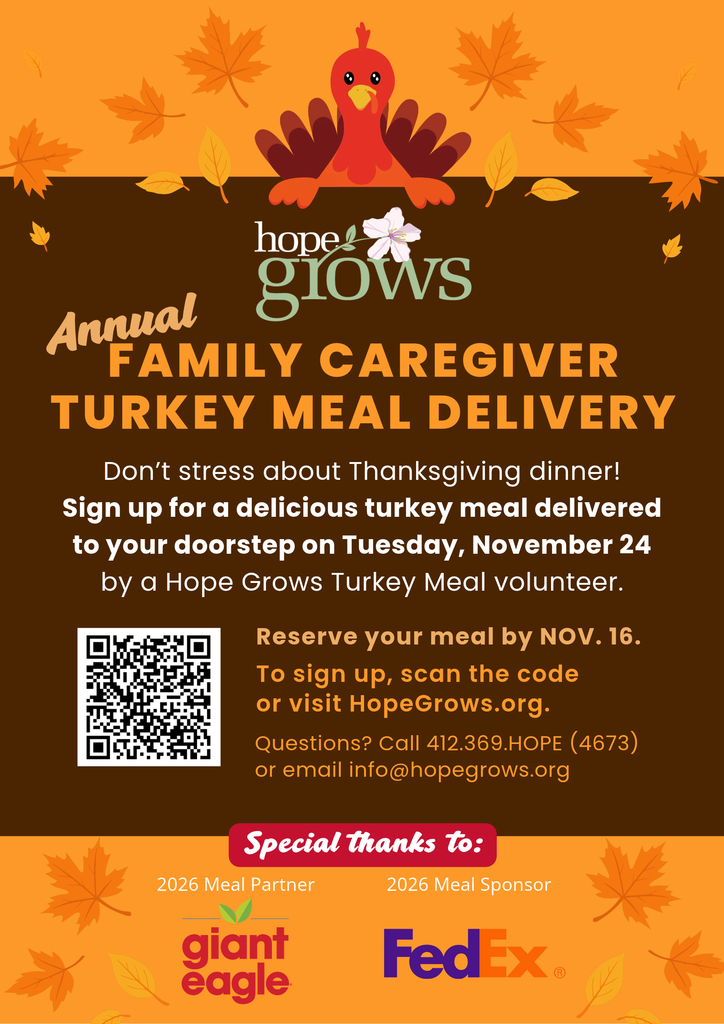
Thank you for joining us this November month of 2023 as we celebrated caregivers during National Family Caregivers Month and our Hope Grows 8th Annual Celebrating YOU! event, our 7th Annual Bob Evans Turkey Meal Deliveries, and Gladness, our Focus of the Month!

This month, we talked about the importance of “taking a break” and shared ways to do this in “just 10 minutes.” I was able to be a witness of a common theme of “gladness” in the air at our events, as everyone began to experience “rest” and “connection” with each other.

How suitable that the famous quote “there are only four kinds of people in the world: those that have been caregivers, those that are caregivers, those who will be caregivers, and those who will need caregivers,” is being widely circulated this month.

If you follow any movement of advocacy for caregivers, you are familiar with Rosalyn Carter, God rest her soul. The former first lady, founder of the Rosalynn Carter Institute for Caregivers died on November 19. She established the institute in 1987, to promote the health, strength, and resilience of America’s 53 million family caregivers. I think we can all be glad and express thanks and appreciation for her work.

“Being thankful is the quickest path to joy,” said Jefferson Bethke, a best-selling author of Take Back Your Family and Jesus, Religion and It’s Not What You Think. Thankfulness and joyfulness is at the root of gladness. The dictionary tells us that gladness is a type of happiness, an emotion one experiences when in a state of well-being.

So, why are we not in this state of well-being all of the time? Easy! Stress! It is a fluent part of our daily lives and impacts our emotions; it just isn’t possible to maintain a constant state of happiness. Is that okay? I think so. This is why healthy coping mechanisms are crucial and cultivating a balance in life is an important practice.

For those that know me, I am the grandmother to 8 beautiful human beings. Watching their growth from a perspective of a seasoned mother and a mental health therapist has truly become a constant state of behavioral observation. Of the 8 children, two of them are girls, and I am and have been a witness to my 6- and 13-year-old granddaughters, both in very different development and emotional states. Nonetheless, they both live with a constant ebb and flow between happiness (gladness) and a state of, what I call “childhood hysteria.” This frenzy is normal and what I see them doing is coping appropriately. Their parents have given them the tools to bounce back into a state of gladness (happiness, if you will) when stress or something doesn’t go, in their mind, correctly.

Gladness, or the feeling of happiness and joy, can have significant positive psychological effects on stress. When you experience gladness, it often counteracts the impact of stress in several ways. Reduction in stress hormones, improved resilience, and a positive mindset are just a few.

Healthy coping mechanisms are a form of mindfulness, exercise, social support, and problem-solving skills. I truly believe though, for my two granddaughters, part of the success is they just don’t stay in an unpleasant emotion for too long. As most children, they can bounce from the stressful unpleasant moment quickly, if given the right environment.

Stress is a natural part of life, and the key to managing it effectively is by finding a balance between the stress and gladness. Our Hope Grows Care Model includes ways to find that balance and, in that moment, I believe is a place of equilibrium where we find a more empowered, fulfilled, and resilient person, which then reinforces the reason to be in this state of well-being.

Our state of mind is so full of emotions, why wouldn’t we want to feel more than just gladness all of the time? After all, an unpleasant emotion often can lead to change. If I didn’t experience sadness, Hope Grows may not exist. The mission grew from sadness and grief; good things can happen when we experience unpleasant emotions. The important part is knowing how to cope: “take a break” daily and don’t linger in the unpleasant for too long.

So, go into the last month of the 2023 with the thought of cultivating gladness, as it can create a ripple effect of positivity. Some suggestions are to laugh and smile (even when it’s hard to), seek learning and growth, positive self-talk, acts of kindness, engage in activities you enjoy, and implement a gratitude practice. Practicing gratitude and almsgiving changes our brain chemistry. More on that later, but what a great month to give of yourself and let the world know how glad you are to express YOU through giving. The return is worth it…A Glad and Joyful Heart.

Happy Thanksgiving!

Written by Lisa Story, MSCP, LPC, CT
Hope Grows Founder & Clinical Director

Health & Nutrition with Chef Hanna: Trail Mix Cookies

“Food is our common ground, a universal experience.” – James Beard

There is debate as to how and when the Pittsburgh cookie table came to be, but there is no question that it’s a Pittsburgh tradition. Some say the tradition came about during the Great Depression. It’s said that wedding guests would bring their favorite cookie to the table to lessen the financial burden of the evening for the newlywed couple. In this sense, families and communities came together to support the couple as they embark on their new lives together.

Family and friends start planning cookie tables just about as soon as the wedding planning starts. Everyone seems to have their own specialty cookie that they’re sure to bring. Each step of a cookie table involves community – from planning, to preparing, storing, and finally displaying at the event. Folks start baking cookies months before the wedding, storing them in every inch of freezer space available before the big day. Even after the wedding, cookies are enjoyed and given away for weeks following the big day. Visits to Grandma usually involve a sendoff of a Ziploc bag of the cookie spread (Grandma being sure that you don’t go home empty-handed while also trying to reclaim an inch of freezer space). Platters and trays will be filled up with cookies at every get-together for months to come. It’s always a good reminder of who made what cookie and the love that went into preparing each and every one.

The first time I brought my Californian husband to a Pittsburgh wedding, he couldn’t wrap his head around not the one, but the two cookie tables that flanked the reception hall. The first dessert plate he grabbed had just a couple of cookies, followed by a second plate, and then a third. As wedding photos started to take longer than expected, he realized that the cookies on the opposite table held different options than the first and had to start the sampling process all over again. By the time dinner was served, he had enjoyed so many cookies he turned his head up at the steak tips, which was unheard of for my meat-loving fella. Later, when he proposed to me, the first question was if I would marry him, quickly followed by the question of which cookies would be on our cookie table.

Weddings are already a community event, but Pittsburghers add another layer of community with the love that comes along with preparing and presenting a cookie table. While working at a resort in California, I came across an order for a wedding that included the cake I would be preparing, as well as a note about the hundreds of cookies being shipped in that would need to be stored before the reception. I knew immediately that at least one of the families involved in the wedding was from Pittsburgh and had an instant connection to these folks who I hadn’t even met. Cookie tables are a great way to bring people together while creating a sense of community.

My favorite cookie is a gooey chocolate chip cookie, but being high in carbs, sugar, and fat, they aren’t necessarily the best cookie for you. Chocolate chip cookies are great as a decadent treat, but a more health-friendly cookie is my very own “Trail Cookie.” They are gluten-free, high in protein (thanks to peanut butter), and contain multiple fruits. These cookies are still considered a treat, but are a better balanced option. Enoy!

Hanna’s Trail Mix Cookies

  • ½ Cup Apple Sauce
  • 1 Cup Sugar
  • ½ Cup Peanut Butter
  • 2 Cups Oats
  • 1 Cup Coconut
  • ½ Cup Raisins or Craisins
  • 1 Tsp Cinnamon
  • ½ tsp Baking Soda
  • ½ Cup Chocolate Chips

Preheat oven to 350F and line a cookie sheet with parchment paper. Mix apple sauce, sugar, and peanut butter together, and then stir in the remaining ingredients. Scoop dough using a small cookie scoop (1 tablespoon scoop) or a tablespoon, and drop onto the prepared cookie sheet. Bake cookies for 11 to 12 minutes, just until set.

Written by Hanna McCollum, Iris Respite House Chef & Innkeeper

Notes from the Garden: Coffee & Connection

October Plant of the Month: Coffea arabica

doTERRA Essential Oil of the Month: Douglas Fir

On the global level of plant consumption and connection, coffee is an international mogul. It’s one of the top ten most traded commodities in the world, and it serves to connect. There are estimates of 125 million people employed by the coffee industry, either in growing, roasting, exporting, or retail. Chances are, the labor of many different hands, from many different lands, have gone into the next cup of coffee you enjoy.

We drink 2.6 billion cups of coffee worldwide every day. The rise of coffeehouse culture has put one on nearly every corner in major American metropolises and beyond, bringing in folks from the community not only to enjoy a hot cup of coffee made their way, but also to socialize, connect, and exchange information. It seems the coffee bean is bringing us all together.

The coffee bean is actually the seed of the coffee plant. It has sweet-smelling flowers and grows in a tropical weather band around the equator, called the “bean belt,” that spans 70 countries! The seed is found in the fruit, or red “coffee cherry.” When it’s picked, and before they’re roasted, the seeds are green and have a vegetable taste. After the cherries are harvested, the seeds are extracted through a pulping and fermentation process, then dried in the sun. This prepares them for roasting, a complex, alchemical drying process where the nuances of each coffee’s flavor profile are coaxed out at temps of 400 degrees.

Here, the seed is transformed into the bean we know and love. You don’t want just anyone roasting your coffee. This process is so crucial that seconds can make the difference between a perfectly roasted batch of coffee and one that’s considered ruined. Flavor palates like fruity, floral, robust, or chocolaty are all enhanced by roasting. You know that transporting scent of freshly ground coffee? Thank the roaster.

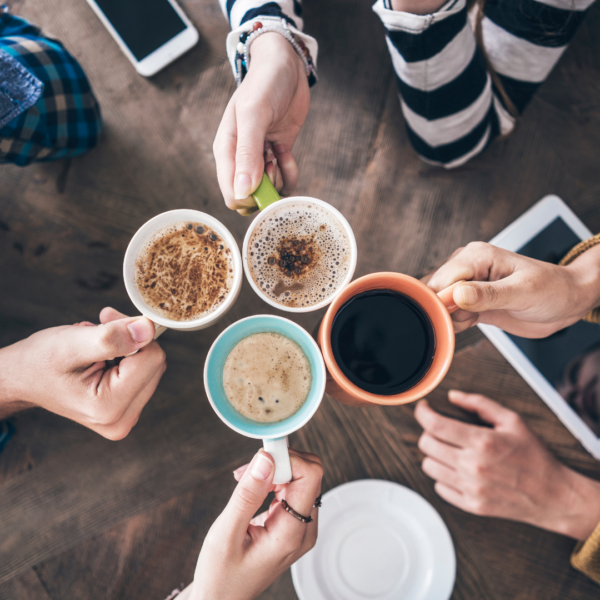
Coffee builds community, one cup at a time. You can always find it at Hope Grows, for every meeting, gathering, and support group. As humans, we are hardwired to connect, both with each other and the natural world. This is something never to be taken for granted, especially in any healing process.

One of the greatest lessons that Hope Grows has taught me is the value of human connection, and to never underestimate its power. In fact, one of Hope Grows’ signature essential oils is called “Abundantly Connected,” and for good reason. Connection moves people, while working to support and unify one another. So many connections run deeper than we can imagine, as there is so much the eye can’t see.

As you enjoy your next cup of coffee, ponder this: data scientist Riccardo Sabatini printed out the entire human genome and wheeled it onstage for his 2016 TED talk. All told, it takes up 262,000 densely printed pages. Of those 262,000 pages, only 500 of them, a mere .19%, comprise the number of pages of genetic code that contains what makes us different from one another. The other 261,500 pages, or 99.81%, of our genetic code is shared by all humans on the planet. Sometimes, connecting over a good cup of coffee may just help us find what’s been there all along.

Gives new meaning to the question: wanna get a cup of coffee?

Written by Jessica Giannotta, Hope Grows Horticulturist

Connection

As Autumn Equinox marked the change of seasons in September, celebrating others through the harvest, pumpkins, and change of leaves creates connection, which is our focus for the month of October.

Understanding the importance of social interaction and in-person connections are fundamental aspects of human life. Connecting with others plays a vital role in our overall well-being, mental health, and societal development. While technology and virtual interactions have their merits and can facilitate communication, there are unique benefits to face-to-face interactions without the mediation of technology.

One of my favorite autumn memories of connecting with others is Halloween. It allowed for in-person interactions, which turned into fun and laughter. What I didn’t know as a child: connecting with others during this time helped with social and emotional development, along with thinking and imaginative skill-building.

There are other benefits to connecting with others in-person. It allows for the exchange of non-verbal cues, such as facial expressions, body language, gestures, and tone of voice. These non-verbal cues convey emotions, attitudes, and meanings that are often difficult to interpret in virtual communication. The more our young continue to use technology to communicate with others, the more they will struggle in these important developmental milestones.

Being with people in person builds trust and rapport. It also enhances an understanding of other’s perspectives, emotions, and intentions. When this occurs, misunderstandings are reduced and clear communication becomes the outcome. Striking a balance between virtual and face-to-face interactions is key to leading a fulfilling and connected life (albeit difficult with so many ways to connect virtually). I was shocked the other day at how many ways someone can reach out to me virtually – 15 to be exact! I asked myself how I let that happen…

Connecting through nature is another one of my favorite ways to engage. As a child, I remember being outside, turning over stones and looking for bugs, trying to find salamanders in the backyard creek, climbing the apple tree, and digging in the dirt. Most of my free time was spent outside and I developed a sense of belonging in my community by establishing a healthy connection with nature. I hardly ever see children outside playing freely. There is a wonderful book, “The Last Child in the Woods,” by Richard Louv. A quick synopsis: the more time children spend in front of technology, the more they lose the connection to nature and become at risk of unhealthy physical and emotional development. The book is a great read, with a good bit of research, but the main point is to get outside and connect to nature.

lanternfly

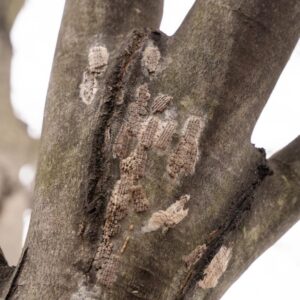
One of things we can do is to help nature right now is to become a detective. We are at risk of a larger spotted lantern fly infestation next spring due to the eggs that are being laid on the bark of the trees. Inspect the picture to the right and if you spot the same formations on any trees you come across, make sure you kill the eggs before next spring by scraping them. More information on how to do this can be found by here.

However you choose to connect this month, keep this in mind: while technology offers incredible advancements and convenience in communication, recognizing and appreciating the value of in-person interactions without technology is essential for maintaining meaningful relationships, emotional well-being, and a sense of belonging in our communities.

Health & Nutrition with Chef Hanna: September 2023

“Laughter is brightest where food is best.” – Irish Proverb

We use food not only to nourish our bodies, but to share and connect with those around us. One of my earliest memories is laughing with my sister while we each wore slices of swiss cheese on our faces and looked through the holes at each other like we were wearing fancy glasses.

I have come to find that preparing and sharing food with others is my love language. Even if the food isn’t the best, good company can make food taste even better. Heck, laughing together over how bad some food turns out can make it taste a little better, too!

Thinking back on other laughing moments throughout my life, I’m reminded of my mom. My mom has always listened to music in the kitchen while cooking. She’ll grab whoever is in close range to whirl them around to Frank Sinatra’s “Fly Me to the Moon,” or to give them a dip to Rosemary Clooney’s “Come On-A My House.” These dance moves are always full of laughter as you (gracefully) try to avoid bumping into the kitchen island or a hot pot on the stove.

One of my favorite foods that my mom makes while dancing through the kitchen is macaroni and cheese. It’s been one of my favorites since I was a kid, and always reminds me of those entertaining, laughing moments in my mom’s kitchen. As comforting as her classic mac and cheese is, it’s not the healthiest. The following options can be subbed to up the nutritional value of this cozy dish:

Lower Calorie, Higher Nutrition
Subbing pureed roasted butternut squash for some of the advised cheese amount to lower the fat and caloric density of mac and cheese is a great way to add nutritional value, as well as a lovely silky-smooth texture to the sauce.

Butternut squash can be halved, rubbed in olive oil, and roasted cut side down until tender. The skin can then be peeled off, or the flesh can be scooped out. Alternatively, pre-cut butternut squash is available in most grocery store freezer sections. Frozen butternut squash can be roasted on an olive oil greased sheet pan.

Once the butternut squash is roasted, mash using a potato masher and stir into prepared macaroni and cheese sauce while holding back some of the usual cheese amount.

Gluten-Free
Traditional pasta can be replaced with a legume pasta. Aside from the gluten-free benefit, this option is higher in both protein and fiber value as well. My favorite brand of gluten-free pasta is Banza. Banza pasta is made using garbanzo beans and packed with twice the amount of protein and three times as much fiber as traditional pasta. Gluten-free pastas can be prone to breaking down quickly, as it does not have the gluten structure to hold it together. A good way to avoid this is to give the dish just a few good stirs once adding the pasta to the sauce, and serving immediately.

Vegan
Vegan mac and cheese can be made by soaking 1.5 cups cashews (for every 12 oz of pasta) in boiling water for 5 minutes. Then drain and blend with 1 cup of fresh water, 8 oz of vegan shredded cheese, a squeeze of lemon juice, and a sprinkle of the following: nutritional yeast, turmeric, garlic powder, and salt. A good vegan shredded cheddar is Violife Cheese Alternative, Just Like Cheddar Shreds.

Try mixing any or all of the above options for a nutrient-packed bowl of mac and cheese and grab an unsuspecting loved one for a do-si-do around the kitchen while you cook…inciting laughter and creating great memories with those around you.

Written by Hanna McCollum, Iris Respite House Chef & Innkeeper

Reflections from the Iris Respite House Healing Gardens September 2023

“The earth laughs in flowers.” – Ralph Waldo Emerson

Laughter knows no bounds. Like the natural world, it serves to connect. Truth and innocence often carry it. It can serve to link us together when we least expect it, even in the scariest of moments, and the best ones are simply unforgettable. We need good laughs, like we need each other. It’s part of what connects us as humans. And, in today’s market of stress-relieving products, it can ease suffering without costing a cent.

The therapeutic effects of laughter on the mind and body are well documented. It’s a powerful healer. The next time you laugh so hard you pee your pants, think about this: a hearty laugh ripples through the motor cortex, which is involved in muscle control (including the bladder!), the frontal lobe (which helps one understand context), and the limbic system (which modulates positive emotions). It creates social bonds, builds resiliency, facilitates intimacy, increases immune cells and antibodies, relieves tension and stress, and can lower levels of anxiety and depression. As someone who has battled high levels of anxiety, I can vouch for how much genuine laughter can temper it. Even better: you can never overdose!

Like bouquets of flowers, good laughs always leave you wanting more. I discovered that the physiological benefits of laughter actually parallel the ones experienced by people who are enjoying a bouquet of flowers, even more so if they spend any amount of time arranging them. They both can trigger the release of dopamine, serotonin, and oxytocin, the “feel better hormones,” as well as reduce levels of cortisol, the “stress hormone.” They both serve to create social bonds, facilitate an appreciation for life, can lower anxiety, and help lift depression. Looks like Emerson had it right!

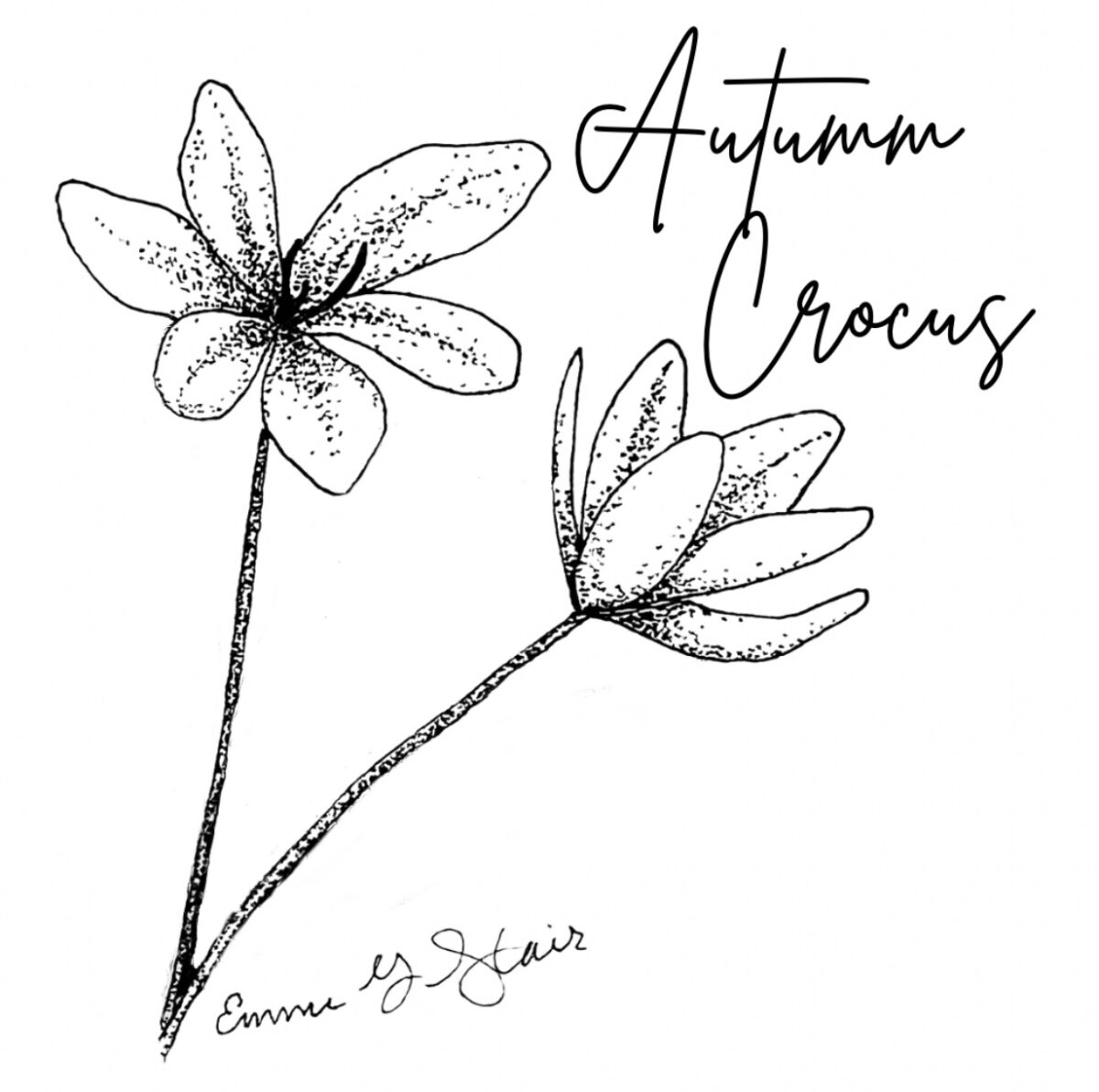
This fall, as you enjoy the earth’s autumnal laughter of flowers, see if you can spot some autumn crocuses. They have a chalice shaped flower, like that of the spring blooming crocus, but autumn crocus flowers are a bit larger. My favorite part of this plant is the unique quality of blooming long after the foliage has died back, like resurrection lilies. That’s how autumn crocuses got the common name “naked ladies,” since it’s only the flower that comes up in the fall. To anyone who didn’t know the plant, with such a long stretch of time in between foliage dye back and the “naked” flowers, it could be one of the earth’s more unexpected autumn laughs.

Genuine laughter, like great music, can’t be forced. It has to move through you from the inside out. That’s why, when it’s real, it’s such a gift. And it almost always has a great story behind it. I leave you with this: I’ve been writing this month’s blog from a cabin in the woods where my extended family has gathered for the week to celebrate my dad’s 80th birthday. After a day of hiking, I had the door shut, my laptop open, and was researching the health benefits of laughter when my cousin came in the room. After chatting calmly with me for a few moments, her facial expression changed drastically when she felt what she was sure was a tick bite her on her rearend. Mind you, she was completely covered from the mid-neck down. I don’t know how any insect would have even gotten beyond her outer layer of clothing. Nevertheless, without wasting a moment, she dropped her pants in a panic right in front of me and had to make sure there were no ticks attached to her in any way. Turns out it had been a piece of plastic that had gotten lodged in her underwear! We both laughed so hard it hurt. When I finally caught my breath, before my oxytocin levels had come down, I marveled at the moment. Innocence and truth had us riding the waves of laughter once again. And my anxiety? Nowhere in sight.

Written by Jessica Giannotta, Hope Grows Horticulturist