Tracey’s Story: Embracing the Journey

After an accidental acquaintance, Tracey found Hope Grows to be an inclusive, safe place where she could both work and find support.

Cultivating Caregiver Wellness
After an accidental acquaintance, Tracey found Hope Grows to be an inclusive, safe place where she could both work and find support.
Studies show that caregivers who participate in support groups improve not only their one wellbeing, but that of their care recipient.
It was one day as she walked out the door on her way to work, trash bag in hand, and checking items off several mental lists she carried in her mind, that the thought fully formed into words. “I am a primary caregiver.”
Phyllis has experienced caregiving twice in her life, first for her father, and now continues to do so for her close friend and roommate, Ruthie. Phyllis and Ruthie had always shared household expenses and tasks throughout the more than two decades they’d known each other and Ruthie’s quick humor, a pension for telling a good story, and easy manner had been a helpful balance to Phyllis’ more serious nature.
Why Having Someone Who Understands You Is So Important
But it wasn’t until that moment that the diagnosis of Parkinson’s reared its head and shifted the balance of their lives so that the word caregiver took on its most personal meaning. Phyllis encountered Hope Grows when founder Lisa Story visited the Parkinson’s Foundation. It was at the South Hills Movers & Shaker’s support meeting that the term, “Caregiver” came up again. Lisa Story presented Hope Grows’ mission, services, and a therapeutic activity at that Parkinson’s Foundation of Western Pennsylvania sponsored group. It was during that presentation that a window of hope opened, and a much-needed balance seemed possible again.
Her emphasis on mindfulness resonated with Phyllis, who when the opportunity came again, immersed herself with Hope Grows. The focus on self-care helped Phyllis to recognize that she must care for herself in order to care for her care receiver to the best of her ability. She believes that the most important thing Hope Grows teaches is self-care and is key in supporting and ministering to caregivers.
Positive Affirmations for Caregivers
With the balance of the relationship changing, their mutually caring relationship again emerged through the Hope Grows respite care, training programs including Powerful Tools for Caregivers, and consistent support and the understanding of friends and family.
Phyllis loves the purpose of caregiving because in caregiving you are truly making a difference in someone’s life. She believes that by caring for someone, you are “honoring your commitment to them and their relationship.” Despite the way the relationship has evolved and interactions differ from the past, there is great love and subtle satisfaction in doing what you can for your loved one.
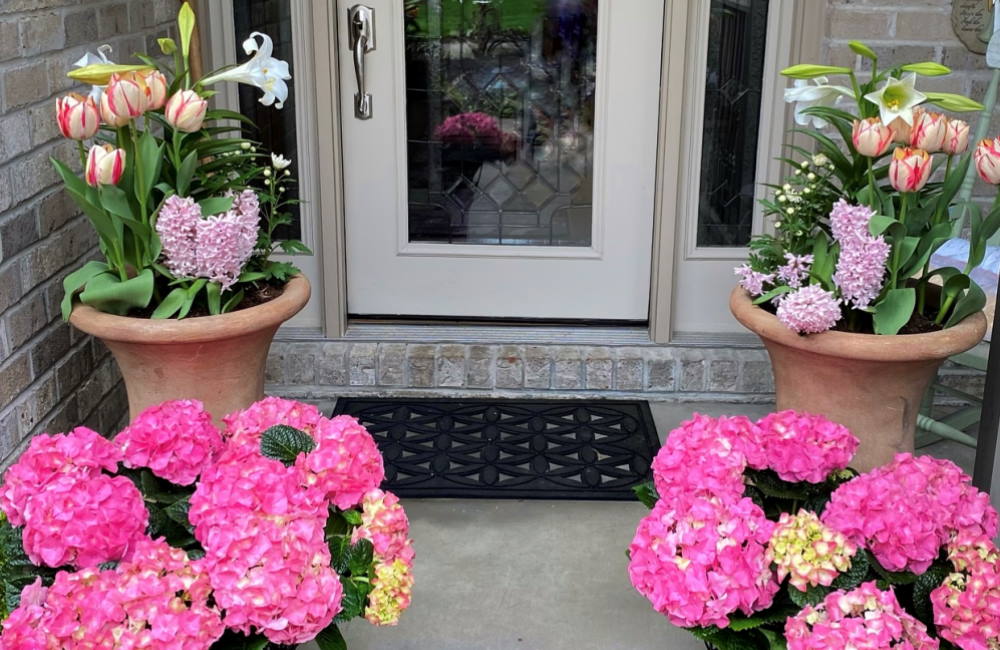
Hope Grows helps Phyllis to feel better and be at peace through the environment and people, who foster rest and support. She likens Hope Grows to your favorite cozy chair – relaxing yet supportive. Phyllis enjoys the respite activities that Hope Grows conducts because of the wonderful perspective they provide and programming where Ruthie can participate. She loves to visit the Hope Grows property and walk through the gardens which remind her to pause in order to incorporate mindfulness and practicality into life. Phyllis cannot decide which garden is her favorite because of their uniquely beautiful properties, but she does enjoy the seasonally rotating potted plants at the Iris Respite House entrance because they remind her to recognize the beauty in the change.
Phyllis recounts some of her favorite experiences with Hope Grows to be the teas and the Powerful Tools for Caregivers workshop. The Powerful Tools for Caregivers program moved Phyllis significantly and she describes it as light but useful and serious, in addition to one of the best experiences of her caregiving life. The teas are special times with peers who understand the caregiving journey and allow each unique story to be heard and recognized. These events give perspective and create a sense of belonging within the community.
The best advice Phyllis has for other caregivers stems from the thought caregivers encounter all to often: I’ll just do this one more thing that will help my care receiver.” It is often that “one more thing” done as exhaustion sets in that creates havoc with our own health and well-being. She recommends holding back the urge to do so and taking those few minutes to care for yourself. Making intentional moments of self-care allows a caregiver to remove tension and stress, benefitting themselves and their care receivers.
Plant of the Month: Ginseng. Panax ginseng (Asian Ginseng) & Panax quinquefolius (American Ginseng)
doTerra Essential Oil of the Month: Petitgrain
Rishi Tea of the Month: Red Ginseng Iron Goddess Oolong
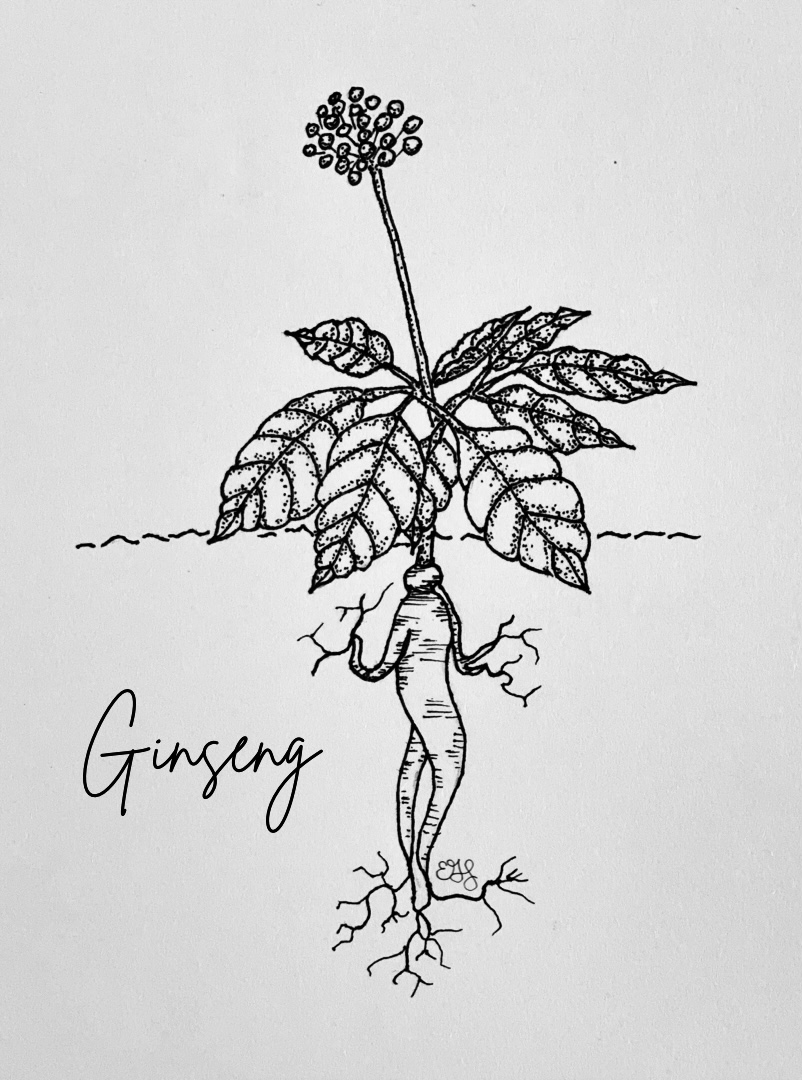
In keeping with the focus for the month of March, our botanical picks were chosen for the symbolism they provide; immortality and strength. The botanical picks for the month of March include the herb Ginseng, the essential oil Petitgrain and the tea Red Ginseng Iron Goddess Oolong. The plant is both American and Asian, and highly valued for their multitude of medicinal uses. Ginseng’s medicine is found in its root, a taproot that has to develop for at least 5-7 years before its ready for harvest. The word ginseng, in Chinese characters, actually translates to “human root,” and the plant is often referred to as “Man Root” because the forked shape of the roots resembles a human torso and legs. Some of the most prized specimens actually look like a whole human body, making ginseng one of those “Doctrine of Signatures,” plants, which states that herbs resembling various parts of the body can be used by herbalists to treat ailments of those body parts.
The botanical genus name, Panax, is derived from the Greek “Panakos” (meaning “all-cure,” or panacea) in reference to the variety of health benefits attributed to the herb. Native Americans have used American ginseng to treat fever, headaches, pain and indigestion. Traditional Chinese medicine has used Asian ginseng for 5000 years to treat anything from colds, respiratory disorders, impotency, and fatigue to cancer, as well as to promote stamina, strength, concentration, improved memory and slow the aging process.
Our tea of the month was selected because of ginseng’s role in bolstering the immune system during the change of seasons. Fittingly, it’s symbolic for immortality and strength. While it may not allow you to live forever, folks have been using it to live longer, better and stronger lives for a very long time.
With a flavor that’s said to be sweetly aromatic, wild ginseng can be processed into red or white ginseng. Both are available in liquid extracts, tinctures, tonics, teas, energy drinks, powders and capsules. The root can also be chewed raw, used in fresh tea, soups and stir fries. Or, it can also be dried. In Chinese medicine, Asian and American ginseng plants are actually used for different treatments. American ginseng is considered to nourish the yin energy, meaning it’s cooling and moistening. Asian ginseng, however, has the dry and warming qualities of “tonifying yang.”[i]
The essential oil, Petitgrain, also has historical roots, widely used in the perfume industry and is distilled from the bitter orange tree leaves and twigs. This essential oil can be diffused for a calming and relaxing aroma, help with feelings of tension by applying it topically and a drop or two added to water for help with the immune system.
American ginseng is an herbaceous perennial, found in the woodlands and native to eastern North America. Hardy in zones 3-8, it grows on the shaded floors of mature deciduous hardwood forests and is not an easy one to grow. For starters, the seeds take 18-21 months to germinate, requiring at least a full year of seasonal cold/warm cycles before it will sprout in its second spring. It then requires the forest floor’s moist, nutrient-rich soil and leaf litter to mature over the next 5+ years, before it can even be considered ready for harvest. Ginseng is considered a slow grower, and has been known to live up to and beyond 25 years. These plants have a history of being a hot commodity for hundreds of years. Harvested for trade, to this day, growers need to protect their crops due to pillaging.
In plant folklore, it’s said that Panax will bring beauty, love, money, sexuality, and health to all who carry it. After doing the research for this blog, I would like to weigh in on this. Money, yes, given the high demand for this plant, I can buy that. Health, absolutely, with thousands of years to back it up. Sexuality, yup, it’s a well-known aphrodisiac. Beauty, maybe, ginseng is used in some skin care products. The jury’s still out on love though. I haven’t run across any yet, but heaven only knows how many love stories have been born while on the quest for some ginseng.
Evelyn shares her struggles of caring for her mother with dementia and how she found a sense of community with Hope Grows.
Love of self and love of others are both possible if we give love the care, respect, understanding and knowledge that it deserves.