Botanicals of the Month: July

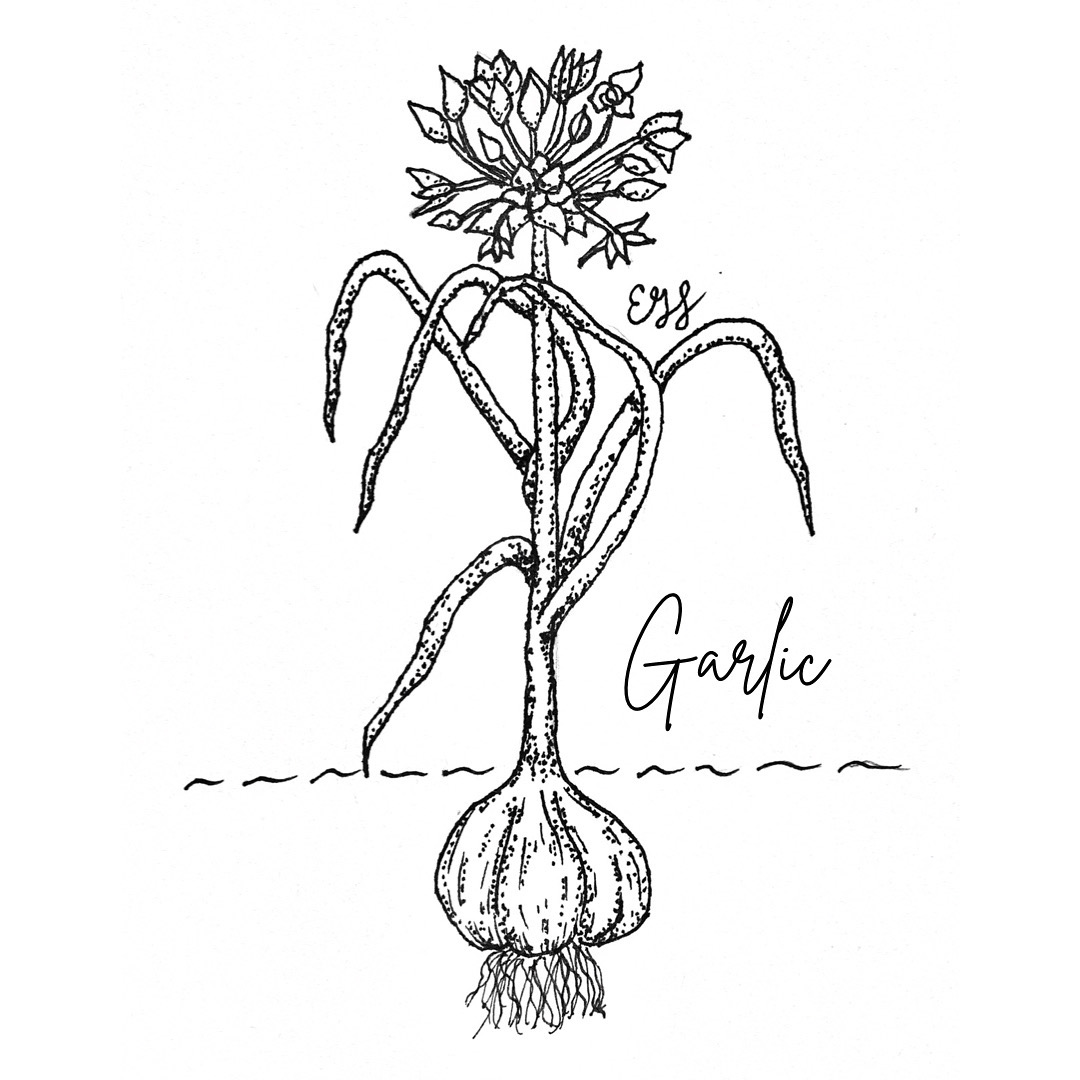
July Healing Plant of the Month: Garlic (Allium sativum)
Doterra Essential Oil of the Month: Cassia
Rishi Tea of the Month: Fuding Silver Needles Vintage 2022
Garlic, our healing plant for July, represents courage of mind, body and spirit. Not only has it been turned to for thousands of years, in cultures throughout the world, for its protective and healing attributes, but it’s also been relied upon as a source of stamina and strength for anyone facing daunting odds. Ancient Greek soldiers ate garlic before going into battle for inspiration and courage. Ancient Greek athletes would take garlic before a competition. Odysseus used garlic to prevent the sorceress Circe from turning him and his men into pigs. It was dedicated to Mars, the Roman god of war, and the Romans believed if a man chewed garlic during his footrace, no one would pass him. Egyptians fed it to the slaves building the pyramids to ward off illness and increase strength and endurance.
Islamic legends say that when Satan left the Garden of Eden, after the fall of man, garlic arose inside of his left footprint and onion in his right. Before I started researching this plant, I was sure it meant something along the lines of protection. After all, everyone knows that garlic is supposed to ward off evil, vampires, werewolves and the like. And that’s not just in our culture. Sailors have carried garlic on board in hopes of protection from shipwrecks. Garlic wreaths outside a house’s door will ward off witches and psychic vampires. Matadors often wear garlic around their neck for protection during a bullfight. And one clove on a string around the neck is said to protect travelers, although see if anyone wants to sit next to you on the train when you’re wearing one.
Garlic has earned the reputation of being “as good as 10 mothers” for good reason. Medicinally, it’s been lauded for its role in reducing high blood pressure, cholesterol and blood sugar, boosting immune function, as well as guarding against heart disease and cancer. Apparently, though, this is nothing new. Hippocrates, the “father of medicine,” recommended using it for pulmonary complaints. Sanskrit records actually show its medical use 5000 years ago, Chinese records 3000 years ago and, the surviving Indian medical text, “Charaka-Samhita” recommended using garlic for the treatment of heart disease and arthritis 2000 years ago!
I can see why this plant is associated with courage. In France, it’s been referred to as the “Theriac of the Poor,” or the poor man’s heal-all. Called “the Russian penicillin,” its antiseptic qualities were called upon to prevent infection when it was used on soldiers’ wounds during World War II. During the Bubonic Plague, garlic merchants were actually found to die less often. Like today, people wore masks for protection, but took it a step further and soaked them in garlic-steeped vinegar. And, during the flu epidemic of 1918, people wore necklaces of garlic when they went out in public. Can’t say that I’ve seen that during Covid. In all of these situations, garlic’s protective and medicinal qualities must have afforded people some much-needed courage in the face of humbling, life or death, fear and adversity. And to think, I just put it in soups and stir-fries without thinking. I don’t think I will ever look at it the same way again.