Tender Growth

The Misunderstood Language of Care

“Rest, Relax, & Restore!” and “Take care of yourself.”  Words Hope Grows has uttered over the course of their mission. Words that are often offered with the best of intentions. And yet, for caregivers and those grieving, they can feel hollow—even frustrating.

At Hope Grows, we understand the difficulty, we know that your world has shifted, rest is not always restorative. Stillness can feel loud. And balance is not something you find—it is something you practice, moment by moment. Emotional regulation, too, becomes an ongoing act of patience. Not perfection. Not control. But gentle returning.

April arrives with a quiet insistence. Like the slow unfurling of a petal. Again, and again. Like breath. Not the bold certainty of summer, nor the deep stillness of winter—but something far more delicate. A season of becoming. A season of tender growth.

Fragile Beginnings

There is a moment—often quiet, often unnoticed—when caregiving begins. It may not feel like a beginning at all. It may feel like an interruption, a disruption, or an overwhelming shift. But beneath it, something new has taken root.

Tender. Uncertain. Fragile.

The same is true in grief. When we lose someone we love, the world does not simply pause—it changes. And in that change, we find ourselves at the beginning of something we never asked for. A new way of being. A new landscape to navigate.

Like April soil, recently stirred, we are not yet steady. We are not yet strong. We are simply… beginning.

A Lesson from the Garden

This week, I planted lettuce and herbs—my first planting of the season. It felt hopeful. A small act of trust in what is to come. And yet, as April reminds us, hope requires attention. Freezing temperatures are in the forecast. Which means I must remain vigilant—watching the weather, covering the plants, protecting them from forces beyond their control. 

And as I tend to them, I am reminded of what it means to care for something in its early stages. This is what it means to honor fragility. Not by forcing growth, but by protecting it.

In nature, this tenderness is easy to see. The soft emergence of tulips, their petals still learning how to open. The tulips, bright yet vulnerable, bending with each passing wind. The earth, recently thawed, offering just enough warmth to invite new life forward—but not without risk.

This is not a season of full bloom. This is a season of fragile beginnings. And so, it is for caregivers. And so, it is for those who are grieving.

Protecting Your Tender Growth

Shielding, protecting, defending. There are seasons in life where we, too, require this kind of care. Where nourishment is disrupted. Where energy is depleted. Where even the idea of reaching out for community feels distant—misaligned with what our soul is quietly asking for.

Confusing?? For sure!! This concept is unclear because we are told that connection is healing. And it is. But there are moments when what we need first is not outward connection—but inward protection. A covering, a boundary, a gentle tending to our own internal climate.

Like placing a cloth over young plants to shield them from frost, we are allowed to create spaces of safety for ourselves.

This may look like:

  • Saying no without explanation
  • Stepping away from noise or expectation
  • Choosing rest in a way that feels right, not prescribed
  • Allowing emotions to come and go without urgency to “fix” them

This is not withdrawal. This is wisdom.

The Symbolism of April: Tulip & Geranium

It would not be me if I didn’t bring in some symbolism with this month’s flower and essential oil pick. The tulip, April’s flower, carries the essence of gentle emergence. It does not rush its bloom. It responds to its environment—opening when conditions allow, closing when they do not. There is much to learn from the rhythm of nature. There is some level of permission with this flower. There is permission to open slowly, permission to close when needed, and permission to honor your own timing.

Geranium, April’s essential oil, speaks to emotional balance—not as a fixed state, but as a living rhythm. It reminds us that steadiness is not the absence of feeling, but the ability to move with our emotions rather than against them. In part, the reason we put Geranium essential oil in our Signature Blend that we sell here at Hope Grows. Together, they offer a quiet message of not having to be fully open to grow and not having to feel balanced to find your way.

Continue through April with a Gentle Reflection

April is not asking you to bloom.

It is asking you to tend.

Written by Lisa Story, MSCP, LPC, CT
Hope Grows Founder & Director

At Hope Grows, we support those grieving a loss. If you are struggling, reach out to connect. Call us at 412.369.4673 or email [email protected].

Written by Lisa Story, MSCP, LPC, CT
Founder of Hope Grows

Focus of the Month: Tender Growth
Essential Oil: Geranium
Flower: Tulip

Disclaimer: This site offers information designed for educational purposes only. You should not rely on any information on this site as a substitute for professional medical advice, diagnosis, treatment, or as a substitute for professional counseling care, advice, diagnosis, or treatment. If you have any concerns or questions about your health, you should always consult with a physician or other healthcare professional.
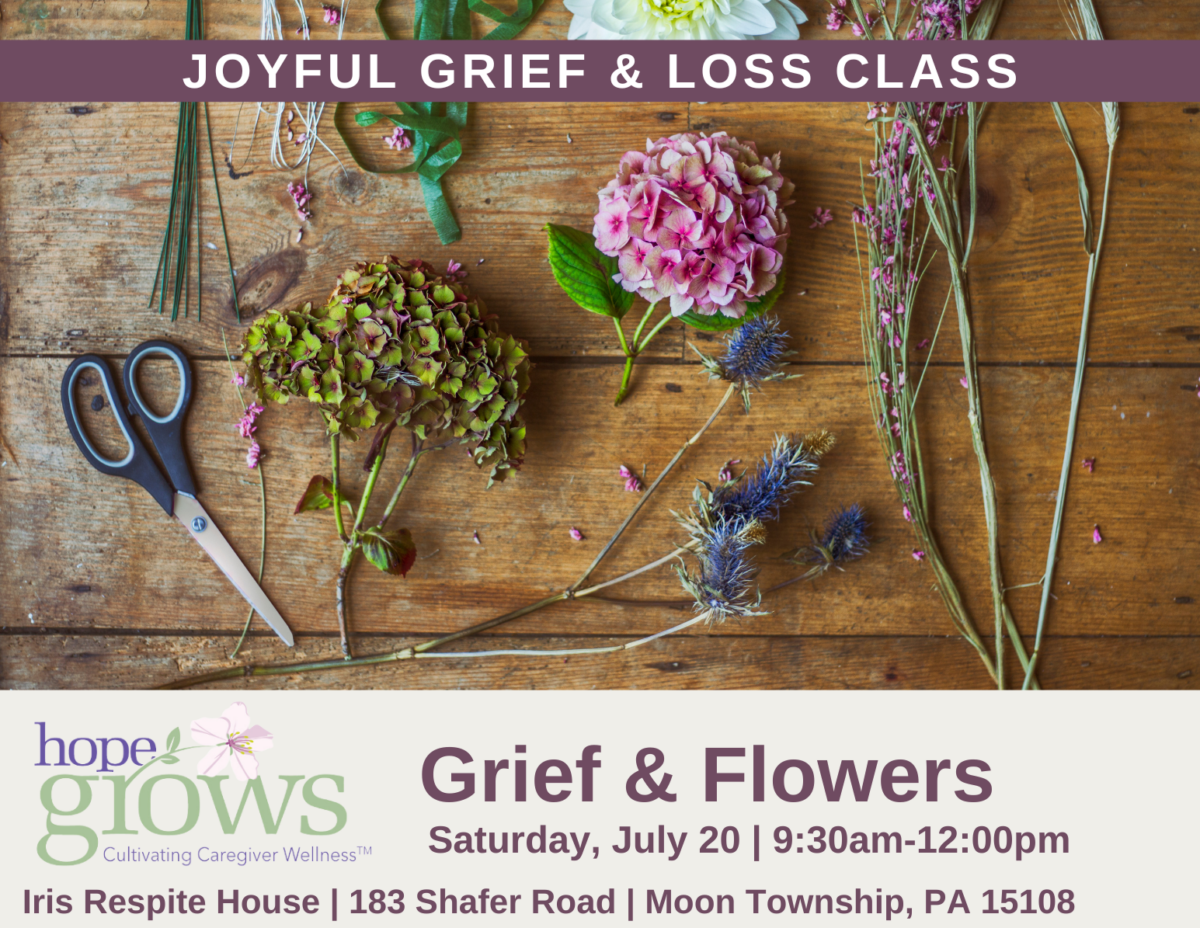
Joyful Grief & Loss Classes: Grief & Flowers

THIS CLASS HAS BEEN CANCELED AND MAY BE RESCHEDULED FOR A LATER DATE

With grief and loss comes uncertainty and doubt. Join us in learning that our identity and personality exist beyond grief. You’ll arrange a floral bouquet to take home and connect with the symbolism of flowers and nature to help find joyful moments in your journey of grief. By using flowers and its symbolism to find those joyful moments, “flowers” become a path to specific roles in healing.

Attendees must be willing to work with flowers in and from nature. Walking through the healing gardens, (if able, but not necessary) is also part of the class.

***********************************

The Joyful Grief & Loss Classes at Hope Grows are part of an educational and supportive program that promotes the concept that while grief can be painful, it can also present moments of joy. Learn about the emotional pain of grief by way of tactile activities to process and let go of difficult moments and feelings. While building a sense of community, the journey becomes finding moments of ease and glimpses of the beauty that can surface. Each class builds upon the other; however, it is not necessary to attend all.

  • October 19 – Grief & Senses: A Sensory Class with Hope Grows
  • Early December – Community Gathering

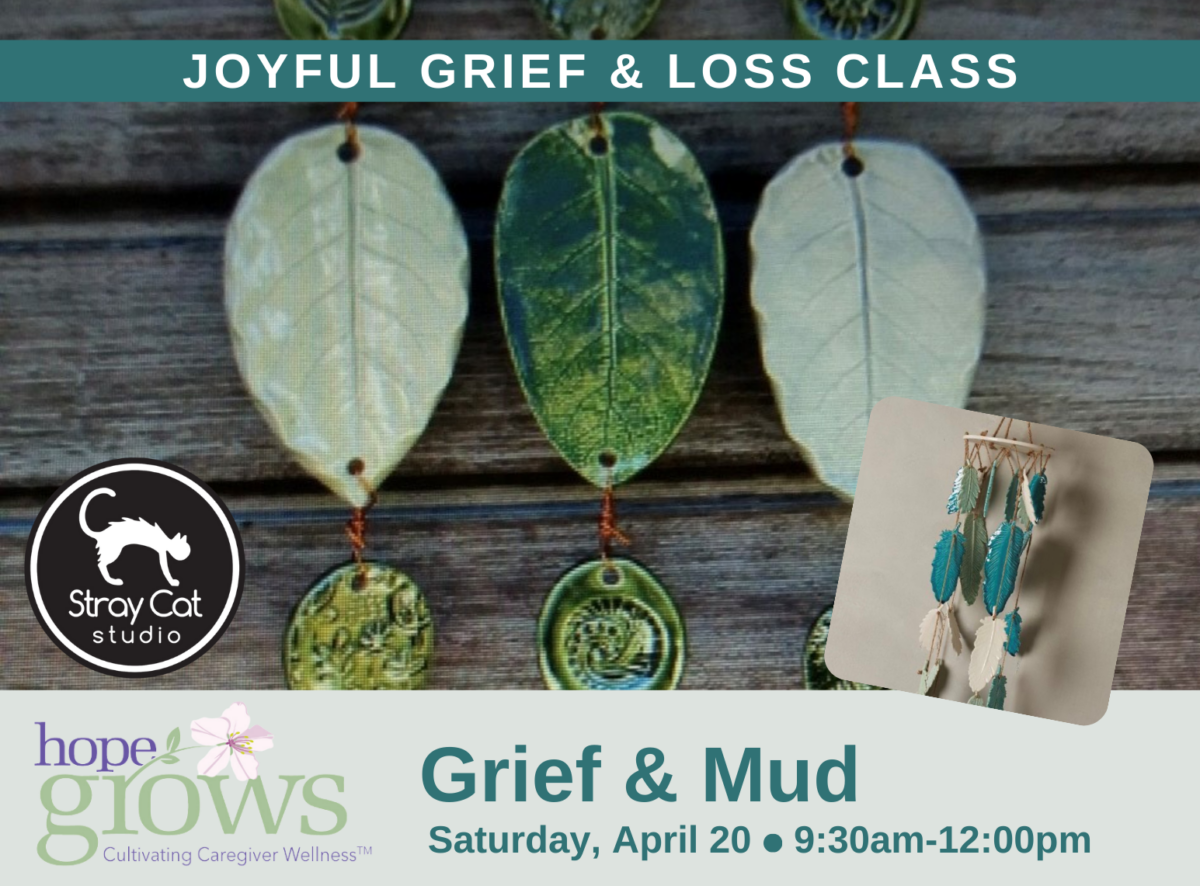
Joyful Grief & Loss Classes: Grief & Mud

Join Hope Grows and Stray Cat Studios for a unique clay class that is both healing and enjoyable as we process our loss and understand the important concepts of memorializing. The tactile activity of creating and making a memorial
wind chime will serve as a practical and beautiful piece to honor our loved ones.

Suggested donation of $65
CLICK HERE TO REGISTER
**12 participants max**

***********************************

The Joyful Grief & Loss Classes at Hope Grows are part of an educational and supportive program that promotes the concept that while grief can be painful, it can also present moments of joy. Learn about the emotional pain of grief by way of tactile activities to process and let go of difficult moments and feelings. While building a sense of community, the journey becomes finding moments of ease and glimpses of the beauty that can surface. Each class builds upon the other; however, it is not necessary to attend all.

  • July 20 – Grief & Flowers: A Flowers in the Garden Class with Hope Grows
  • October 19 – Grief & Senses: A Sensory Class with Hope Grows
  • Early December – Community Gathering

Reluctancy

Leonard Cohen, from his song, Anthem, once said: “there is a crack, a crack in everything. That’s how the light gets in.” I find this to be fascinating. As we all know, our first reaction to a significant loss is a crack, if you will, in our life, and we choose, from the pain, to be reluctant to let any light shine in.

At least it was for me. I remember when I first heard the words, “Dad has pancreatic cancer,” no light was getting through, and for a long while his dying process was handled with busy-ness and avoidance of the reality. While in the mode of visiting him and caring for him, adrenaline kept me going. I thought if I kept myself busy, attending to the family, working, visiting my dad, and taking care of all of the paperwork for him, I could avoid the inevitable: his death.

Boy, was I wrong. If you know me, watched any of the Hope Grows historical videos, or read any of my blog articles, I didn’t just mourn my dad when he died…I mourned my mom who died 20 years prior as well. You see, I was reluctant to believe she died when I was 22 years old and, more importantly, thought that if I didn’t think about her death and got on with my life, I would be just fine.

Wrong! All I did was delay my grief. It came back with a vengeance and bit me in the butt rather hard when my dad died. I mourned both of them, as if they died together. It wasn’t until I let the light shine in, did I then evaluate and learn what I had to offer from my pain.

At that time, I was reluctant; unwilling and resistant to see and learn what was ahead of my pain. Luckily for me, my dad spoke to me through a dream. I was NOT reluctant to believe in a divine intervention through that particular night’s dream. My dad loved being outside, in nature, doing something adventurous, so it was apropos that the dream was of nature. The night of his visit – dream, divine intervention, whatever you what to believe or call it – he took me for a walk in a beautiful garden. The sun rays, the light from it, if you will, was the focus, shining down on me with his smiling face in it.

After waking, I allowed my higher self to begin to see that there was something beyond the dark. I got to a place where I eventually provided a “gift of grief,” as Therese Tappouni shares in her book, The Gifts of Grief, Finding Light in the Darkness of Loss. You see, I had to address the past, the pain and loss, to heal from it. As a grief counselor and educator, I’ve always said, there is no way to heal from grief other than to go through it. And that became the journey of my grief: going through it and not being reluctant from the lesson it was teaching me. From there, my higher self allowed for the gift: the creation of Hope Grows.

So, where does the reluctancy of grieving stem from? Various ways in which we grieve, with the main one stemming from the emotional pain and heartache that comes from loss. Grieving can be emotionally draining, not to mention it can affect us cognitively, physically, spiritually, socially, financially, and behaviorally. Other than the avoidance of the emotional pain and heartache, reluctance can come
from:

  • Time and Energy Constraints: Other obligations, such as work or family requires a significant investment of time and energy.
  • Financial Concerns: Closing out an estate is expensive and time consuming; putting death affairs in order is daunting.
  • Lack of Support: Mourning the loss from death leads to feelings of isolation and burnout. Even with adequate support from family, friends, or community resources, grievers may feel reluctant to reach out.
  • Impact on Personal Life: Balancing all duties with personal needs and aspirations can be challenging. Grievers may feel reluctant and/or think they have to sacrifice their own goals, hobbies, or social life to process loss.
  • Health Concerns: Mourning a loss can take a toll on one’s physical and mental health. Reluctance may arise from concerns about the impact on one’s own wellbeing.

Addressing reluctancy with grief often requires a multifaceted approach that involves recognizing and addressing the underlying causes, seeking support from others, and implementing strategies to manage stress and maintain a healthy balance between all of life’s responsibilities, including personal well-being. This can include seeking respite care, joining support groups, setting boundaries, and practicing self-care techniques. With all of that, Hope Grows is here to support you through your loss and to help with any reluctancy you may be experiencing.

I would be remiss if I didn’t mention our essential oil and flower for the month of March. Oregano essential oil is powerful. According to Spiritual Scents, “The calming properties of oregano oil can relax the mind, balance the emotions, and banish mental fatigue.” Wealthful Mind tells us that the oil is “an herb of joy, safety and lightness of spirit.”

Now let’s take our flower of the month, the sweet pea. Sweet peas are popular ornamental plants grown in gardens and used in floral arrangements for their beauty and fragrance. Symbolically, sweet peas are associated with happiness, pleasure, gratitude, friendship, and delicate beauty – the opposite of what we feel when we are grieving. Pleasant feelings are helpful for any reluctancy.

If you find yourself in a dark place and need to see the light, consider the above blog, talk to someone about the use of oregano oil, and seek out growing some sweet peas this spring. Jess, our Hope Grows, horticulturist, could talk with you about the growing properties of sweet peas and I can chat with you about oregano essential oils.

Written by Lisa Story, MSCP, LPC, CT
Hope Grows Founder & Clinical Director

Disclaimer: This site offers information designed for educational purposes only. You should not rely on any information on this site as a substitute for professional medical advice, diagnosis, treatment, or as a substitute for professional counseling care, advice, diagnosis, or treatment. If you have any concerns or questions about your health, you should always consult with a physician or other healthcare professional.

VIRTUAL Life After Caregiving

Our afternoon virtual sessions are tailored for those navigating life post-caregiving. Under the guidance of our Root of Good Care Counseling team, we aim to provide a space that blends insights with genuine empathy. From the comfort of your chosen space, let’s come together to share experiences, offer support, and contemplate the journey ahead. Your story and feelings matter deeply to us. Let’s embark on this next chapter together, understanding and supporting one another. We hope to connect with you soon.

RSVP to [email protected].

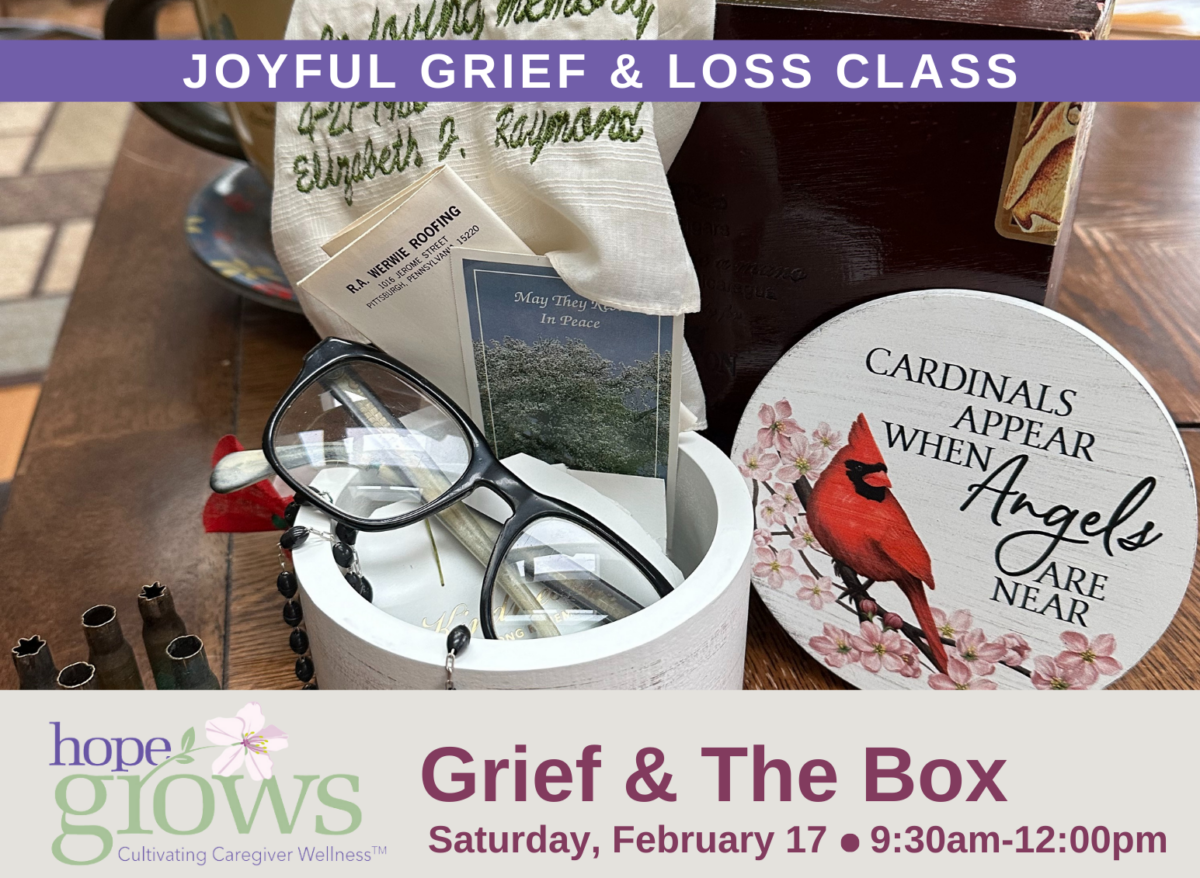
Joyful Grief & Loss Classes: Grief & The Box

Join us for moments of grace and gratitude by creating a box of cherished items.  Grief creates a feeling of being out of control and by giving attention to symbolic expression, our feelings and thoughts become easier to share with others. This class provides a place for exploration of your identity with grief; as with loss comes a sense of “Who Am I.” 

Suggested donation of $50
CLICK HERE TO REGISTER

***********************************

The Joyful Grief & Loss Classes at Hope Grows are part of an educational and supportive program that promotes the concept that while grief can be painful, it can also present moments of joy. Learn about the emotional pain of grief by way of tactile activities to process and let go of difficult moments and feelings. While building a sense of community, the journey becomes finding moments of ease and glimpses of the beauty that can surface. Each class builds upon the other; however, it is not necessary to attend all.

  • April 20 – Grief & Mud: A Mud on the Move Class with Stray Cat Studios
  • July 20 – Grief & Flowers: A Flowers in the Garden Class with Hope Grows
  • October 19 – Grief & Senses: A Sensory Class with Hope Grows
  • Early December – Community Gathering