Stewardship of Energy

Things We Never Really Own

There is an uncomfortable truth that nature quietly teaches us: nothing truly belongs to us. Not the towering oak that shades the garden, not the changing seasons that arrive without our permission, not even the breath we are taking at this very moment. For a time, we are simply entrusted with them.

During my years as a hospice spiritual counselor, I came to understand something that no textbook could have taught me. No matter how much time I spent talking with someone or quietly sitting beside them, I could not save them. I could comfort the soul while disease continued its course. Nurses cared faithfully for bodies that continued to weaken. None of us could stop death. What we could do was accompany another human being with dignity, presence, and love.

Accepting this truth was heartbreaking. Yet, over time, it became strangely liberating. Looking back, I realized this was a profound stewardship of energy. Our purpose was never to control life. Our purpose was to bear witness to it.

There is something deeply sacred about sitting beside another person in their vulnerability. Holding a hand. Preparing a meal. Listening to the same story for the tenth time because it still matters to the one telling it. These moments rarely change the outcome. They change us.

Perhaps that is the deeper work of caregiving.

The philosopher Martin Buber wrote that life is found in relationships. We become ourselves not in isolation, but in genuine encounters with one another. Grief reveals this truth with startling clarity. When someone dies, we discover that love has never been measured by the number of days we shared, but by the ways one’s life continues to shape our own.

Spend even a few moments in the gathering spaces of a funeral home, and you notice something remarkable. Families rarely begin by talking about careers, awards, or accomplishments. Instead, you hear things like: “She made everyone feel like family,” “He taught me how to forgive,” “She listened without trying to fix me,” and “He always showed up.” These are the stories that remain. They remind us of a life measured less by what we accumulated than by what we cultivated in others.

This is why grief asks something different from us than simply “moving on.” It asks us to become good stewards of the energy that remains. That energy can be found in the stories, the traditions, the values, the laughter we can still hear, the recipes written in familiar handwriting, and the lessons learned through ordinary days that no longer feel ordinary.

These reflections have become the heartbeat of the Hope Grows’ Gathering Table. The Legacy Project invites caregivers and those who are grieving to share their stories. I am continually reminded that storytelling is far more than therapy. It is one of humanity’s oldest spiritual practices. Stories answer perhaps the deepest question we ask near the end of life: “Will this life be remembered?”

Legacy is carried forward in quiet moments that no one else notices. Legacy lives in quiet acts of listening, comforting, mentoring, and compassion. It is also about “what we cultivate in others.” Legacy is not what we leave behind; it is what continues to grow in the lives of others because we experience something.

Nature has always understood what we struggle to accept, that endings and beginnings often occupy the same space. A tree does not cling to its leaves when autumn arrives. It releases them, not because they were unimportant, but because letting go is part of making room for what comes next. The leaves become nourishment for the very ground that will sustain future growth.

Perhaps our lives are meant to unfold in much the same way. Bearing witness, is itself, an act of stewardship. When we truly witness another person’s suffering, another person’s joy, or a life well-lived, we become responsible for carrying some part of that story forward.

That’s what the Legacy Project is doing.

That’s what caregivers do.

That’s what grief eventually asks of us.

In the end, stewardship has never been about owning anything at all. It has always been about faithfully caring for what was entrusted to us, knowing that one day we will place it gently back in the hands of time. Perhaps, maybe that is the invitation August quietly offers us. Not to ask how much more we can do. But to ask what has been entrusted to us and how we will care for it while it is still in our hands.

Written by Lisa Story, MSCP, LPC, CT
Hope Grows Founder & Director

August Focus: Stewardship of Energy
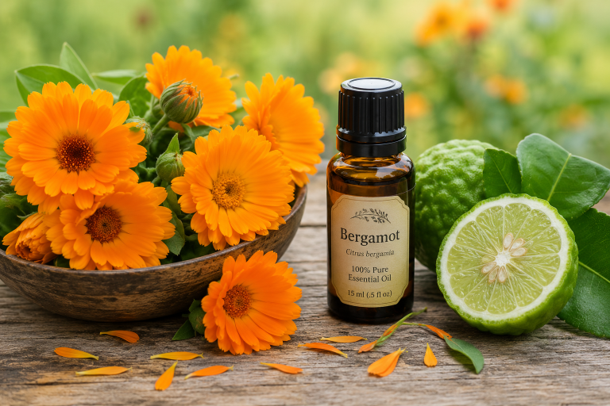
Essential Oil: Bergamot
Flower: Calendula

At Hope Grows, we believe healing happens when we create space for both grief and growth. Through counseling, support groups, respite opportunities, and programs such as The Gathering Table, we invite caregivers and those grieving a loss to share their stories, find connection, and discover moments of restoration along the way. Call us at 412.369.4673 or email intake@hopegrows.org.

Disclaimer: This site offers information designed for educational purposes only. You should not rely on any information on this site as a substitute for professional medical advice, diagnosis, treatment, or as a substitute for professional counseling care, advice, diagnosis, or treatment. If you have any concerns or questions about your health, you should always consult with a physician or other healthcare professional.
Belonging

The Cost of Love (and the Gift of Belonging)

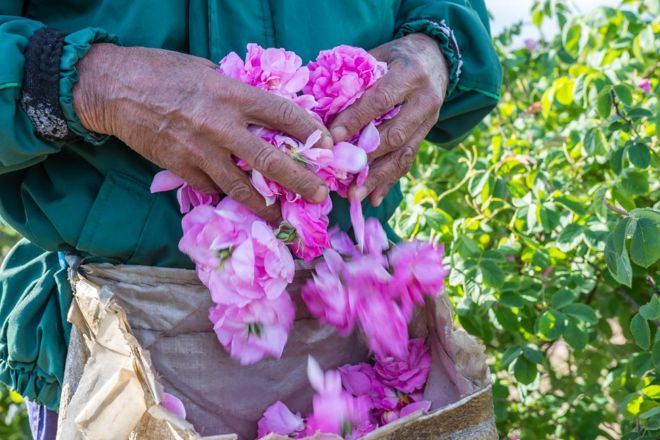
There is something almost unbelievable about rose oil. It takes approximately 252,000 individual petals—about 8,000 roses—to produce a single 5ml bottle. Forty-two pounds of petals, gathered, distilled, transformed… into something so small, so potent, so precious. Holy roses!

And perhaps that is where we begin this month.

Because caregivers understand cost. Not in petals—but in moments. In sleep lost. In meals skipped. In parts of themselves quietly set aside. Love, in caregiving, often becomes synonymous with giving. With doing. With enduring. But what if belonging asks something different from us?

A Different Kind of Love

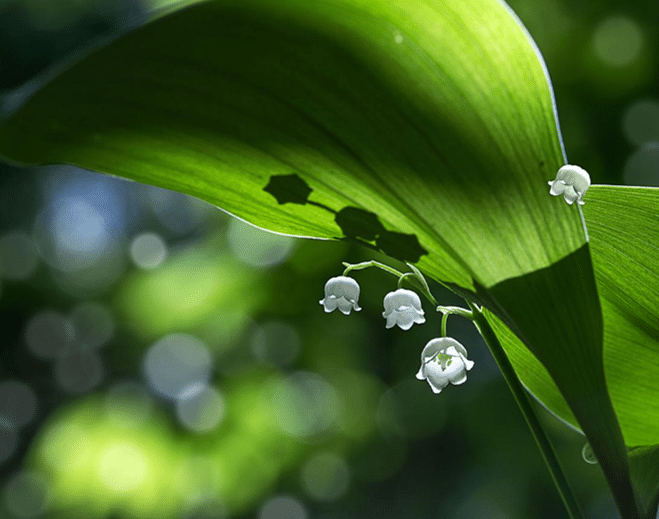
Lily of the Valley blooms softly, almost hidden. It does not demand attention. It does not compete for space. It simply exists—sweet, quiet, present. Its fragrance is not overwhelming. You must come close to notice it. There is no striving in it. No performance. Just presence.

And this is where we gently challenge a thought that many of us have come to believe. That love must be proven through depletion. That connection must be earned through sacrifice. That belonging is something you give, not something you receive.

There is a sweetness that can come without demand. At Hope Grows, we often speak about rest, restoration, and care, I mentioned this in last month’s Tender Growth blog. I know those words can feel hollow when your world has shifted. So, let’s not start there. Instead, let’s ask a different question. Can you allow love to exist, without needing to prove it? Not the love you give, but the love that might be offered to you. Because belonging is not built through effort alone. It is cultivated through allowing.

Lilly of the Valley 1

Hope Grows and the Root of Good Care Counseling practice strives to nurture the process of sitting with someone’s pain, and allow the emotion without judgment.

By allowing someone to sit with you without fixing, allowing a meal to be shared without obligation, and allowing your story to be heard without needing to shape it into something acceptable is one of the hardest things to do but worth trying.

The Gathering Table: Where Belonging Is Practiced

This “allowing” is the quiet heartbeat of the Gathering Table & Legacy Initiative. Not a program you attend, but a space you enter. A table where nourishment is offered—not just in food, but in presence. Where stories are shared—not for outcome, but for connection. Where mentorship is not about guidance alone, but about walking beside. There is something sacred that happens when people gather without expectation.

When the question is not, “What do you need to do?” but rather, “Can you simply be here?”  Many ways, it mirrors the rose. Thousands of unseen moments that come together to create something deeply meaningful. Not because of what each petal does individually…but because of what they become together.

A Gentle Disruption

So here is the invitation—and perhaps the disruption—for May. What if you stopped measuring your love by how much it costs you? What if belonging was not something you had to earn and what if sweetness—real, sustaining sweetness—did not come from pushing through… but from softening into connection? This may feel unfamiliar, even uncomfortable, but so does standing still in a season that is asking you to grow in a different direction.

The rose reminds us that something precious can come from many small parts.
The Lily of the Valley reminds us that presence does not need to be loud to be meaningful.

And nature, as always, offers us a quiet truth where nothing blooms alone. Not the rose, not the lily, and not you. It is about being rooted and connected.

Reflection

As you move through May with the focus of belonging, consider where in your life you are trying to earn belonging? And then what might shift if you allow yourself to simply receive it?

Written by Lisa Story, MSCP, LPC, CT
Founder of Hope Grows

At Hope Grows, we support those with multiple issues, including caregiving and grieving a loss. If you are struggling, reach out to connect. Call us at 412.369.4673 or email intake@hopegrows.org.

Focus of the Month: Belonging
Essential Oil: Rose
Flower: Lily of the Valley

Disclaimer: This site offers information designed for educational purposes only. You should not rely on any information on this site as a substitute for professional medical advice, diagnosis, treatment, or as a substitute for professional counseling care, advice, diagnosis, or treatment. If you have any concerns or questions about your health, you should always consult with a physician or other healthcare professional.