Closing Current Doors to Open New Ones
If you follow my blog posts and the story of Hope Grows, you may remember the spiritual and divine part of the beginning of the mission. I was always a person that when a door closed in front of me, (not literally, but figuratively), I would stand behind what occurred and wonder what I did wrong, what could I have done differently, or what do I need to improve in myself to have made the opportunity work. Basically, I was hard on myself.

As the story goes: after my dad’s death, he appeared in a dream to me, and upon wakening, the first thing I said was, “Hope Grows.” I then would talk to his spirit and ask for guidance in making sense of his visit. Soon after, the idea of supporting family caregivers and grief and loss was born, and I began building the mission/vision of Hope Grows. During that time, the one thing I changed about myself was not deliberating over a “door being closed.” When an opportunity became unsuccessful, I asked, “Dad, show me the open window.” Sure enough, something would present itself without much effort behind it.

Closing current doors to open new doors (or, in my case, new windows), speaks to the often-challenging decisions we make when we choose to leave behind familiar situations, routines, or relationships to allow room for new possibilities. It’s a process that involves understanding what no longer serves you, or what may be holding you back, to make space for what could propel you forward.

As we wind down the year of 2024 and consider any New Year’s resolutions, lets talk a bit more about wrapping up the year with the message of letting go; it can be both daunting and deeply freeing. Charging forth into the new year with a fresh perspective requires a bit of intention.

An end-of-year reflection can help us release missed opportunities and unmet expectations. This is essential in freeing us from holding on to something that isn’t working. In looking back at my visitation (dream) from my dad, the spiritual awakening that had occurred brought courage to let go of what wasn’t working. In this case, the pain of losing him, the loss of identity I was feeling, and the need to create something bigger than myself; this had many highs and lows. No doubt, my experience was divine, as there is more to the story, but I found the strength to let go of my attachment to how things “should” have been and I reclaimed an energy and a focus, built from the love for my dad, his love for nature, and my mother’s love for plants and flowers.

I’m not sure that I was acknowledging any missed opportunities or unmet expectations in my life, other than a need to heal from my loss, to move away from how I was viewing me, and just begin to engage in life differently. Retreating to nature to find that peace was what I did and believe me when I say, I met a lot of resistance and faced a lonely path at first. For starters, my family and spouse were not on board at first and, in hindsight, I believe they were acting on their own emotions of fear of losing a mom and wife to something they didn’t understand. I was the matriarch, always making sure their needs were met, and I suppose there was a twinge of egocentricity from them from my new found directive in life.

The more “doors that seemed to be closing” on starting a nonprofit, and designing and implementing the existing healing gardens on the property, the more I felt power, determination, and a reclaiming of vigor and motivation. I trusted in myself more than I ever had in my life, which bolstered my ambition. The motivation was stemmed from envisioning the new path and what I had hope to achieve. To this day, I am still hoping the big vision of this unfolds, with many more Iris Respite Houses & Healing Gardens throughout the country, and achieve the nation-wide support this mission deserves.

As the new year carries a sense of promise for a new door opening, remember that we are all continually evolving. I continue to embrace the concept of when the “door” closes, I ask Dad for the “open window.” So, I invite you to let go of what isn’t serving you and look for the possibilities of who you can become in this life of yours. Embrace the renewal, or the opening of a new door as a gift.

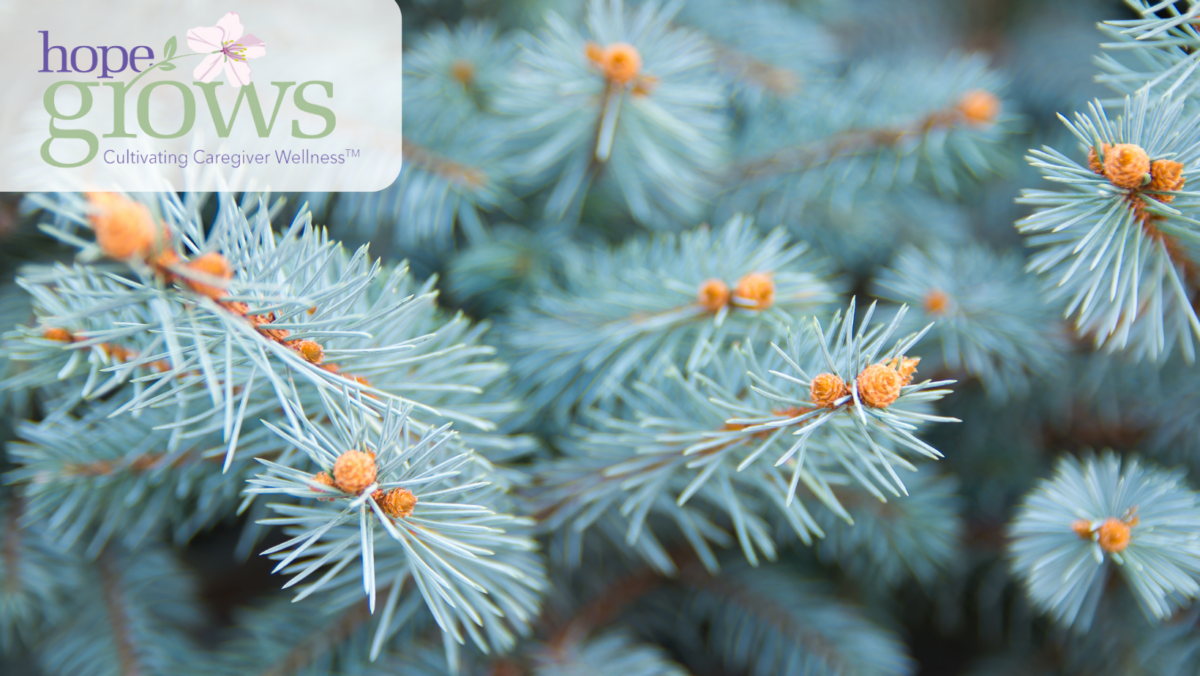
One last thought with nature as a focus: if you need a bit of help, think about the Siberian Fir and the Blue Spruce. They carry wonderful symbolic messages of closing one chapter and opening another. These trees grow in rugged environments, enduring harsh conditions and changes, yet they remain resilient, tall, and majestic. Here are a few ways these trees can inspire the journey of closing a current door and opening a new one:

  • Strength & Resilience – like the trees, you also have the strength to endure changes and face uncertainty.
  • Rootedness – these trees are deeply rooted and you, too, can be deeply rooted in a new possibility. Focusing on your values and skills that ground you, even as the winds shift when facing changes.
  • Evergreen Nature – the fir and spruce are evergreens, symbolizing renewal and the ability to stay vibrant through all seasons. Draw inspiration from this in knowing that letting go is not an end but an evolution of your journey.
  • Adaptability & Growth – as mentioned, both trees thrive in challenging climates, demonstrating the beauty of adapting. It is imperative to trust in your ability to adapt and find beauty in the growth.

Above all, don’t forget that using imagery in this way can help you find the potential possibilities in the transition of closing the door and opening a new one.

Letting go our attachment to how things “should” have been can feel a bit like defeat, but trust me when I say it is a powerful way to reclaim energy and focus.

Merry Christmas and Happy New Year! See you in 2025!

Lisa Story, MSCP, LPC, CT
Founder & Clinical Director
Finding Your “Why”

The arrival of autumn brings a powerful metaphor for change, reflection, and letting go. I feel like this seasonal transition is one of the most talked about and I ponder and wonder the reason, other than nature serves as a mirror for our inner journey, helping us refine ourselves and find the “why” in life.

One of the most “why” provoking life events is any pain and suffering, such as violence, abuse, and loss. Violence is just senseless, abuse is merely unacceptable, and losing someone is heartbreaking. None the less, they all provoke the proverbial “why” question.

While finding our “why” can be challenging in most circumstances, I believe the pain and suffering from violence, abuse, and loss deserve a different emotional response than the written words in this blog. For the sake of this communication, my focus here is caregiving, and the pain and suffering caregivers witness on a daily basis can often make life feel disorienting and overwhelming.

Being there for someone in the most vulnerable time of their life is an ebb and flow, where we are consistently evaluating our space and time to be at the top of our game, so to speak. The transition of seasons can guide us in many ways and by considering the reciprocal relationship between self and nature, we can help with the “why” that surfaces.

If you are a regular reader of these blogs, you will know that I have talked about this type of reciprocity before. Use this blog in a way to find guidance in connecting to the deeper “why” amidst the difficult emotions providing care evokes. Consider the thought-provoking words below and the suggested reflection.

When we witness suffering as part of a natural cycle in nature, there is constant death and rebirth, decay and renewal. While suffering is difficult to witness, understanding it as part of the broader life cycle can help reframe its meaning. Just as storms pass and seasons change, suffering too, while painful, has a place. Witnessing pain does not negate the moments of love, peace, and healing that occurs, it becomes a greater rhythm beyond the immediate hardship.

Reflection: Ask yourself how you can see the suffering you witness as part of a larger cycle. Can you find peace in the knowledge that, like nature, all things are impermanent, and your presence is helping someone through a critical part of their journey?

Even nature endures challenging moments, with its small, subtle growth. Albeit slow, but yet, almost an imperceptible growth. Similarly, caregiving often involves small victories that can easily go unnoticed in the midst of pain—moments of comfort, moments where dignity is preserved, or where human connection transcends suffering. Finding your “why” in caregiving may lie in recognizing these subtle, yet meaningful impacts.

Reflection: At the end of each day, reflect on one small moment where you helped or witnessed something good. It could be as simple as offering a kind word, seeing a patient’s smile, or easing someone’s burden, even if briefly. These moments can help you reconnect to the purpose behind your care.

Nature is always fully present, adapting to each moment as it comes. Caregiving too demands presence, a mindfulness that allows you to be fully engaged in each task, each interaction. When the pain and suffering seem overwhelming, being present in the now—without trying to control or fix everything—can help ease the emotional weight. In this way, the act of caregiving itself can become a meditation, an opportunity to focus on the here and now.

Reflection: Ground yourself when you feel overwhelmed by taking deep breaths, and focus on the moment at hand rather than projecting into the future or dwelling on the past. Let nature remind you that your “why” is found not in grand gestures but in the quiet, moment-to-moment presence you offer.

A gardener doesn’t control the seasons or stop the cycle of life, but creates conditions for growth despite the inevitable changes. As a caregiver, your role is not to prevent suffering but to cultivate moments of relief, comfort, and peace wherever possible.

Reflection: See yourself as a steward of well-being. Even in the face of pain, you are creating space for hope, dignity, and connection. This understanding can be your “why”—that your care, even amidst suffering, brings essential elements of humanity to those who need it most.

There is a reciprocity of care in nature, a give and take if you will. Caregiving is also reciprocal. You offer physical, emotional, and spiritual support and, in turn, caregiving offers you opportunities to grow in empathy, patience, and resilience. The service you provide often unlocks a deeper sense of purpose. Your “why” may emerge in recognizing that the act of caregiving, no matter how painful, is also part of your own personal growth and evolution.

Reflection: Consider how the experience of caregiving is shaping you. How is this deepening your sense of compassion? What lessons are you learning about the fragility and beauty of life, about your own capacity for love and strength?

In nature, nothing exists in isolation—everything is interconnected. Similarly, caregiving can often feel isolating, but it’s important to remember that you are not alone. Leaning into community support (other caregivers, friends, family, spiritual groups, or Hope Grows) can remind you that your “why” is connected to something larger. Even the strongest tree thrives in a forest, not in solitude.

Reflection: Find a way to connect with other caregivers or people who understand your challenges. Sharing your experiences can help you process difficult emotions and find meaning in the shared human experience of caregiving.

In nature, harsh conditions often create resilience and beauty—think of how trees with deep roots survive storms or how flowers bloom after fire. Similarly, the suffering you witness can deepen your sense of compassion, empathy, and patience. Caregiving, when seen through the lens of this reciprocal relationship, becomes not just about providing care, but about allowing that care to transform you as well.

Reflection: Consider how the suffering you witness has softened or expanded your heart. Your “why” may not always be found in what you can do to relieve suffering, but in how your heart responds to it with kindness, understanding, and love.

One final thought worth considering: while caregiving during times of suffering may feel unbearable, considering the above nature suggestions with the reflection, a deeper purpose just might emerge. Everything is interconnected, temporary, and part of a larger whole in nature. Your “why” in caregiving may not be about fixing or stopping the suffering, but about showing up with presence, love, and resilience amidst the pain.

Let your care be a reflection of the cycles of nature, EVER-Giving-Growing-Evolving, even through the darkest of seasons. And remember, if the hike gets rough, Hope Grows is here to support your seasons of change.

Written by Lisa Story, MSCP, LPC, CT
Hope Grows Founder & Clinical Director

Gifts of the Autumn Equinox

When I was a child, I had one of those fold-out growth charts on my wall, where my mom would measure how tall I had gotten every few months, draw a line and write my age. I was always one of the shortest kids in my class, so my growth was not always obvious, but that chart always affirmed and proved, that yes, indeed, I had grown, even when it wasn’t evident to the naked eye. Every time my mom was able to record a line a little bit higher than the last, we celebrated with gratitude. I am reminded of this as we approach the autumn equinox this week, a time both in the garden and on our own journey when we take stock of growth, harvest, and give thanks.

Astrologically speaking, 2024 has a doozy of an autumnal equinox week. Last week’s Harvest Moon not only qualified as a “supermoon,” when the moon is within 90% of its closest to earth, but we also experienced a partial lunar eclipse on Tuesday night, where it looked like someone took a bite out of the moon for about an hour. Being the closest full moon to the equinox officially makes it a “Harvest Moon,” which has everything to do with those that work in agriculture. “Unlike other full moons, this full moon rises at nearly the same time—around sunset—for several evenings in a row, giving farmers several extra evenings of moonlight and allowing them to finish their harvests before the frosts of fall arrive,” writes Catherine Boeckmann for the Old Farmer’s Almanac.

And yesterday, the earth’s center and the sun’s center lined up once again, balancing roughly 12 hours of day and 12 hours of night before the dark encroaches upon the light for the winter. While the spring equinox is all about planting and birthing new endeavors, the autumn equinox encourages us to take stock of what’s grown, give thanks, and let go of what no longer serves our highest good. In the garden, it’s time to reap what we’ve sown. Around Hope Grows, that means we are cutting bouquets and harvesting vegetables. I can hold the flowers I’ve nurtured in my hands and watch as people enjoy bouquets. Chef Barbie can make soup with the butternut squash that’s now ripe in the garden.

Spiritually, this is the season to stop, look at where we’ve been, where we’re not anymore, and honor our growth, even if it’s not evident to the naked eye. As the trees shed their leaves in preparation for winter dormancy, it’s time to follow suit and release what no longer serves our highest good. Now is the perfect time to forgive past hurts, release negative thought or behavior patterns, and take steps toward achieving more internal harmony. For those who are tasked with caregiving responsibilities, this has the potential to be quite challenging, as you are probably used to focusing all your energies on someone else. It’s not as easy as cutting a bouquet or harvesting a squash. So, I challenge you, during this astrologically eventful week, to take a moment, find your own personal growth, and celebrate. This may not be easy for some of you reading this, but growth can come in many forms, including ways that only you know about. However small or large it may be, be honest with yourself, mark it, and give thanks. The universe is always working.

Written by Jessica Giannotta
Hope Grows Horticulturist

Steadiness

I woke this morning and the temperatures were cooler and the sky clear and blue, almost an azure blue. There is a lot of historical significance, biological function, cultural and religious significance and symbolism of this color. Biologically, the true color of Azure is rare in living organisms – perhaps a bluebird or blue butterfly?

I was surprised to learn that blue jays are not actually blue and that their blue hue is the result of Rayleigh scattering. Without turning this blog into a science lesson on color, I was fascinated by what I was reading, but then really disappointed to learn about Rayleigh scattering. It not only is a phenomenon that happens with the sky being Azure blue, but is a result of pigment, protein, wavelengths, and refraction.

None the less, the feeling that this Azure blue sky brings remains the same for me, a sense of peace and calm, as well as nostalgia, the one thing that we all seem to strive for in this crazy mixed-up world we live in. I think about the predictability of this phenomenon and the consistent steadiness with which nature provides.

The heat and little rain this summer has also been steady. A lot of water from the spigot has been used this summer, keeping the plants alive. The water bill sure did confirm how much…ouch! The rise of food, gas, and energy has been steady as well. I ask myself, what is going on and how can our nation’s financial security change in such a few short years?

Putting the azure sky and the rise of the cost of living aside, what does steadiness truly mean for caregivers and the Hope Grows Care Model? From a definition standpoint, steadiness is defined in different ways and it depends on the dictionary source you are using as a resource. The Cambridge organization defines steadiness from a behavioral standpoint as “being reasonable and showing good judgment,” so that people trust you. The Merriam-Webster site defined steadiness as “the state of continuing without change.” And one more (as I like to describe things in three for some reason), the Oxford site defined the word as “the quality of being sensible and reliable and the fact of being stable and not changing.”

When I think of caregiving with this month’s focus, I think of the steadiness of the care receiver and how often a caregiver might be watching how quickly the physical stability of their loved one’s gait, balance when they stand, or, in some cases, their ability to be behind the wheel of the car changes. Caregiver concerns about steadiness and when is it appropriate or even permissible to override their loved one’s decisions regarding safety and medical CURE and care.

From the caregivers’ point of view, sensibility and reliability of putting safety first is a decision that needs steadiness. However, concern and fear creep in…knowing that overruling their loved one by taking the keys to the car is going to upset the apple cart, so to speak. From the care receiver’s standpoint, the steadiness of knowing what is reasonable and showing good judgment is not being met with trust. In this case, the steadiness seems to be at odds with the dynamic and sometimes chaotic nature of caregiving.

Caregivers need to remain strong and steadfast because it can serve as a stabilizing force. Remaining steadfast allows caregivers to remain calm in the face of challenges, balanced in their responses to the needs of others, and grounded in their own self-care practices. This steady approach helps to create a nurturing environment, both for the caregiver and the one receiving care. It also fosters a sense of peace and resilience, enabling caregivers to find joy even in difficult moments.

Some things to consider to remain steady: cultivate mindfulness, set clear goals and priorities, establish routines, manage stress effectively, embrace flexibility and adaptability, practice self-compassion, stay connected with your values, build a support system, continue to learn and grow, and take care of your well-being.

Wow! That is a lot. Just know that by embracing some of this, you can prevent burnout and continue to provide compassionate care with a joyful heart. Those tough decisions of taking away the keys is about setting boundaries of safety. Being sensible and steady, in this case, is NOT negotiable. Just like the Rayleigh’s scattering, at first the explanation of it all seems mean, disappointing, and, well, feeling like we are being tricked. I’m sure your loved one feels this way too, but in the end, peace, calm, and eventually joy can be the result.

So, let the phenomenon of the BLUE in nature be a reminder that caring for others doesn’t mean losing sight of one’s own balance and well-being—it means integrating these qualities to sustain both joy and the capacity to care.

Written by Lisa Story, MSCP, LPC, CT
Hope Grows Founder & Clinical Director

Growth

August is typically a productive month in the gardens, with many plants reaching their peak growth and yielding a bountiful harvest. Right now, watering, weeding, and deadheading is what August is all about in the any garden, and certainly at the Healing Gardens at the Iris Respite House.

Continuing to keep up with what nature is NOT providing us right now has resulted in round-the-clock watering. It has become a challenge, but a necessary challenge that gardeners must endure when nature doesn’t cooperate with what the growing season needs.

“Is it worth it?” mumbles the gardener’s pure exhaustion. Hints of learning and implementing a rain dance surface with a constant check of the weather app to learn of any new weather patterns that may inspire a reprieve.

Negative thoughts start and another question ensues: “What is nature trying to teach within all of this oppressive heat and dry temps?” The response is resistance and the uttered word is just “Ugh!”

Stop. Don’t bring that energy into the gardens – reframe to a positive outlook and repeat, “I can handle this, and it will rain.” Mindset! Shift the focus of control! Look at what is resilient, beautiful, and still growing. The fresh herbs, the flowers for cutting, and the produce.

I begin to water again, pull some weeds, clean the flower beds, and water again. Despite the struggle, the flowers look great. I focus on the extra attention of the watering and think about night fall providing the needed respite. Positive thoughts continue. When the sun rises the next day, new growth will be noticed. Ahhh, hope!

Faith is restored. The flowers and plants rebound overnight and the cycle continues. I notice the trees though; they are losing leaves as if the autumn season has already begun. No. Focus on the positive: the trees will sustain. Back to watering and the continued support, which is crucial, along with the weeding and deadheading and the pest and disease management.

Sounds relentless, right? Sometimes life struggles are, too. Understanding growth in relation to nature can be a profound way to find acceptance, teaching us to reframe our thinking, and then soon, our thoughts become peaceful and joyful. It is a process that can be applied in all areas of life, not just in cultivating garden wellness. Perhaps that is the lesson. When gardens – with their cycles of growth, decay, and renewal – become challenging, it can offer a natural metaphor for life and death.

The cyclical nature of life is a natural relatable concept, one to embrace as we cultivate our own growth and wellness. Understanding life and death as it relates to nature is a profound way of accepting, adjusting, processing, and embarking on a new identity in the wake of loss. As we evolve from the loss, growth abounds. Like the spent flower from the heat, the attention and support it receives radiates beauty. As I wrapped up this month’s focus of growth, our area of the world received several days of moments of rain. Was it reframing and letting go, or was it just sheer coincidence? No one will ever really know…

Written by Lisa Story, MSCP, LPC, CT
Hope Grows Founder & Clinical Director

Energy

I spent a bit of mindful energy this morning looking around at the beauty of the gardens here at the Iris Respite House & Healing Gardens. Some rain storms have left us with fuel for growth; the flowers everywhere are bursting with fullness and color. It is as if the flowers got a shot of caffeine overnight; there is a liveliness, a get up and go, an energy.

Energy is an interesting word. We can have all sorts of it and moments of none, so it seems. The word itself projects an oomph to it and when you pay attention to its use, it is everywhere. Statements abound: youthful energy, stagnant energy, quantitative energy, comparative energy, and departments of energy, to name a few. I hear people say, “I have no energy,” “I need an energy drink,” “I have positive energy,” or “He/She has negative energy.” Famous people and scholars tell us that energy of the mind is the essence of life, there is energy in motion, energy flows where attention goes, and energy is contagious: either you affect people or you infect people.

Warren Buffett was quoted saying that “Without passion, you don’t have energy. Without energy, you have nothing.” I suppose that is true, because it takes passion on some days to get out of bed, to brush your teeth, and to eat breakfast. Does passion need to exist to move forward with activities of daily living? I don’t think so – some of those are habitual things we do. However, if we have lost passion in life or are burned out, I know firsthand, it is hard to keep moving forward.

So many questions surface. Most of us have to engage in some type of caffeinated drink to fuel ourselves in the morning. But what about those that exert too much energy all the time? Can it deplete the desire to stay motivated? Can passion move quickly away and cause someone to become stagnant. Can pain and suffering discourage a person to the point of NO energy?

If you look at the opposite meaning of the word, that meaning depends on how you are using it. The English language is complicated, and if you are referring to the energy as a generated power, simplified, the opposite is a lack of. From a person’s spirit and vigor, the opposite could be apathy, depression, and/or spiritual distress. I think of caregivers when I think of the person’s spirit in relation to energy. Caregivers put forth so much energy all of the time in providing care to their loved one, but yet, they keep moving, they keep pushing through, sometimes to the point of complete burnout.

So, what is the antidote? Just like a power grid, a car, or the flowers in the garden, restoration is needed. Dealing with life overload and the stress of long work hours without breaks can indeed lead to burnout and a decline in spiritual, mental, and physical health. Finding ways to manage stress and maintain sanity is crucial. Energy, caregiving, and healing are interconnected concepts that revolve around the well-being of individuals. In the context of well-being, energy can refer to both physical vitality and the more abstract notion of life force or spiritual energy.

The notion of Spiritual Energy is what I think Warren Buffett is referring to in his quote above. Passion, purpose, and meaning are often described as what is needed to have spiritual energy. It is the “chi,” “prana,” or “life force” that keeps the flow of energy through and around the body, impacting overall wellness.

If your life force energy is depleted, or you are just exhausted and need to restore, several strategies can help you escape from the relentless cycle and regain balance. Healing encompasses the processes through which a person recovers from illness, injury, or emotional distress. It can be approached from various angles:

Medical Healing: Involves conventional medical treatments and therapies to address physical health issues.

Emotional Healing: Focuses on recovering from emotional trauma, stress, and mental health challenges.

Spiritual Healing: Utilizes practices such as meditation, prayer, energy work (like Reiki), and other holistic methods to restore a sense of balance and well-being.

Because energy, caregiving, and healing are interconnected concepts, implementing a balanced approach is important. Regularly evaluate your work-life balance and adjust your strategies as needed to maintain your well-being. Remember, it’s crucial to prioritize self-care and seek help when needed to sustain long-term health and happiness. Join us through our Simple Suggestions and sign up for our Think Caregiver emails today! Email [email protected] to get on the list.

Written by Lisa Story, MSCP, LPC, CT
Hope Grows Founder & Clinical Director