Selflessness

Listening to the news, no matter what channel, often portrays the opposite of selflessness. With crime and war being reported around the clock, political slandering of one candidate or another, and the dramatization of weather and other topics, our minds easily shift to negative. Research tells us that the effects of negativity result in cynicism, hostility, and a repetitive loop of only focusing on the bad. Whether we believe it or not, our immune systems are impacted and physical and mental symptoms arise, such as headaches, stomach aches, anxiety, and depression. Discontent of spirit becomes the cornerstone with which we move forward.

Ugh! Who wants all of that? I sure don’t. I have often said that if the news only reported on the generosity, compassion, and concern for others for one straight month, how much better, collectively, everyone would be? I know, I know…a pipe dream regarding the news, but one can only hope. After all, to love or to care for someone is a selfless act, right? For most of the time, when I look around, I see moments of people demonstrating generosity, compassion, and concern for others. However, on the flip side of this, I also see moments of selfishness.

When I get down and out, I think of stories about people paying it forward, people giving to others just because. I turn to stories such as “what goes around comes around.” The act of giving of self just because and then the receiver of the generosity pays it forward in the way they can, and so on and so on…reading about it is, well, just uplifting.

The month of February is traditionally about love with hearts and cupids; the act of generosity becomes the forefront of our existence, at least, and with hope, for most of us! The dictionary definition of selflessness informs us that the act involves putting the needs, interests, and/or well-being of others before our own, without expecting personal gain or recognition.

The focus of selflessness can be difficult when you are in chronic pain, burnout, or experiencing stress and trauma. A few suggestions to help begins with acknowledging your struggles and being gentle with yourself. A few more tips include:

Dr. Irvine Yalom, an American existential psychiatrist and someone who believed that support groups possessed certain dynamics, is one of my favorite theorists and educators in the field of psychology. He believed that increased healing occurs when the facilitator or counselor fosters a cohesiveness and supportive environment. One thing he is known for is his eleven therapeutic factors for achieving change in a person within a group setting. One of those therapeutic factors that I believe is at the forefront of our month’s focus is altruism.

Altruism is self-sacrifice and selflessness. Once someone becomes a member of a collective group, he/she experiences a sense of worth by helping someone else. Value, purpose, and meaning become the giving force for that person and the result is a sense of pride and confidence.

At Hope Grows, we recommend giving of self through volunteer efforts, especially when grieving. When mourning a loss, emptiness and loneliness becomes prominent and through the act of giving and becoming a member of a collective group helps with a sense of value and purpose; meaning of life begins to return.

So, what do you do when selfless actions turn sour? What gets in the way of truly living a life that is altruistic? Start with evaluating obstacles and challenges that are getting in the way of truly living a life that is selfless. Some of these hindrances are:

  • Ego and a sense of pride can hinder altruïsm. When individuals are driven by a need for recognition or validation, it may undermine the purity of selfless actions.
  • Fear of giving too much of themselves will deplete their own resources.
  • Lack of boundaries makes it difficult to sustain selfless acts over time.
  • If the selfless act is conditional and only offered when certain expectations are met or reciprocated.
  • Unconscious bias or prejudices can influence how individuals choose to extend selfless acts.
  • Lack of empathy can hinder one’s ability to connect and respond to others’ experiences.
  • Societal norms and cultural expectations can emphasize individual success and achievement over collective well-being.

Overcoming these obstacles and challenges often involves self-reflection, personal growth, and a commitment to foster a mindset of compassion and generosity. Out of the list above, I believe that the lack of empathy and compassion plays a crucial role, as well as understanding others viewpoints.

One last thought for you. Growing up, my parents had The Golden Rule on the wall in the family room. The principle of treating others as you would want to be treated was something I not only read daily, but watched my parents made an effort to accomplish. Another piece of advice we often heard was, “Don’t judge someone unless you have walked a mile in their footsteps”.

All in all, remember that it is not selfish to take care of yourself; it is a necessary component to living out an altruistic life. However, finding the right balance is essential for your well-being and for keeping the necessary boundaries so that burnout and apathy doesn’t become your ammo.

Happy February! Look into nature for the beauty it gives selflessly; it is there despite the dormancy.

Written by Lisa Story, MSCP, LPC, CT
Hope Grows Founder & Clinical Director

Inspiration

I woke this morning, January 1, 2024, to a small covering of snow. After the rain that our area endured during the Christmas season, I found this to be inspiring. These are the moments of stillness and beauty I talked about in the blog introducing the 2024 theme for the year, Empowering Caregivers through All Seasons. “The brightness of the morning sparked freshness from its dark and dreary place and rekindled an inward rebuilding of what nature does without effort: inspire.”

The focus for January 2024 is inspiration. Inspiration is a force that propels us to reach beyond our “perceived” limitations. Those that provide the selfless act of compassion, such as the act of giving care, is at the heart of an altruistic exertion that surpasses the boundaries of self. Tending to the needs of others, caregiving is a source of profound inspiration to those watching. The act of giving to others not only provides solace to those in need, but also kindles a flame of motivation within the person giving care.

While these small acts of kindness impact the human spirit, one providing the care must be careful of the limits of self. Someone that is extremely compassionate can burn out and someone that continues to give without taking a break can end up with traumatic stress. Both of these can lead to dissatisfaction in life, feeling as if life has no meaning, and questioning one’s purpose. This is called “spiritual stress” and takes quite a bit of healing to feel inspired again.

Nature’s Influence on Caregiving

When this occurs, one can retreat to nature. While in the embrace of nature, inspiration takes on a different manner. The beauty of a sunrise, the tranquility of a forest, or the rhythmic dance of ocean waves possess an unparalleled ability to stir the soul. It becomes a place where one can let go of control; nature doesn’t ask anything of the person embracing its beauty.

Nature, with its cyclical patterns of growth, decay, and renewal, mirrors the human experience. Observing the resilience of a tiny seed pushing through the soil to become a towering tree, or witnessing the rebirth of a barren landscape after a rainstorm, one cannot help but draw parallels to the ebb and flow of life’s challenges and triumphs. Nature becomes a silent healer, imparting valuable lessons of empowerment about adaptation, patience, and the inevitability of change.

When caregiving and nature converge, a powerful interaction occurs, strengthening the soul of the caregiver. Solace and renewal begin to emerge. One can begin to feel, well, almost lifted, healthier and restored.

So, when you feel uninspired from the acts of giving care and it leaves you feeling depleted, take a walk in a serene garden, contemplate the view of a breathtaking vista, or stare into a barren tree and think about its story. This becomes a form of self-care, replenishing the caregiver’s emotional reserves. Nature, in turn, benefits from the nurturing touch of caregiving, as individuals inspired by compassion may choose to extend their care to the environment, fostering a sense of responsibility and stewardship.

In conclusion, the caregiver’s selflessness and the healing drawn from nature fuels the human spirit. Together, nature and caregiving can remind us of the delicate and intricate design of both. Inspiration becomes a living force that breathes life into our actions, a healing and transformative change occurs. As we navigate the complexities of it all, the inspiring moments are the delicate balance between the caregiving and nature, the “reciprocal relationship” that I so often talk about. It forges a path towards a more resilient existence. When the dark and dreary moments of winter bring you down, retreat to nature, even if it is from your kitchen window.

Written by Lisa Story, MSCP, LPC, CT
Hope Grows Founder & Clinical Director
2024: Empowering Family Caregivers through All Seasons

Happy New Year! Every new year brings remembrance, review, and resolutions; it also brings change. The change can be small, such as writing a different year on financial documents, to something bigger, like the planning and cleaning out of closets and drawers. It can also bring about internal changes of self.

Vern McLellan, a writer, speaker, musician, broadcaster, and associate pastor, once said, “What the new year brings to you will depend a great deal on what you bring to the new year.” I happen to agree and believe this to be the answer in bringing about positive change into the new year. Evaluate what isn’t working and make change, resolution, to move forward.

I know this may sound cliché, but I love planning for resolutions and this time of year. I thrive on change and the changing of seasons. The autumn season used to be my favorite, but the older I get, the more winter is becoming my season of choice. Perhaps it’s the stillness and the beauty that sparks from its dark and dreary place, or the inward rebuilding of what nature appears to do without effort. Whatever it is – the beauty in the gloom, the acceptance of changing moods, or cyclical phases – is, without a doubt, at the top. I happen to thrive for the newness that internal change brings; it sparks inspiration and empowerment.

The theme for 2024 is Empowering Family Caregivers through All Seasons. The changing of seasons can be, for some, overwhelming and bring on a sense of restlessness; perhaps a bit of what caregiving may look like. As the seasons change, empowerment can be a valuable antidote for the restlessness.

Empowering the soul in the midst of those dark and dreary days can be challenging. It can also be a transformative experience; as in nature, there are lessons and opportunities for resilience and growth. One of the lessons is the positive thoughts that can occur. While December 21st marked the change from Autumn to Winter, it also became the shortest day of the year. The positive antidote to the often-dreary feeling when this happens is that each day moving forward gets lighter and longer.

As I’ve mentioned in previous blogs and speeches, there is a reciprocal relationship that exists between self and nature. What the new year unfolds is what we choose for the new year, and can help us consider what we have and don’t have control over. So, try to bring with it the positive side of change. Empower the soul by embracing the complexities of life. Find strength in adversity and cultivate a mindset that allows for growth and transformation, even in challenging conditions.

Empowerment in the context of caregiving and loss involves taking intentional steps to regain a sense of control, confidence, and well-being. With caregiving, sometimes it is putting self first – putting the oxygen mask on and taking “Just 10-Minutes” for a short break.

The Hope Grows Think Caregiver program continues to remain a source of strength for caregivers. If you are new to the program, it consists of monthly check-in phone calls, bi-weekly emails that offer Simple “Self-Care” Suggestions, and moments of self-care and respite activities and support. Hope Grows has 11 years of working with and understanding the impact of providing care and the impact that loss has on the mind, body, and spirit. Our goals for those caregiving and grieving are about cultivating wellness; regaining balance and perspective, along with empowerment as some of the benefits. We value those we help with a supportive, understanding, and encouraging way to help navigate the challenging stages of both caregiving and grief.

Learn from the silence of what nature is bringing us right now. In the stillness of a dim and lifeless natural setting of winter, there can be a profound opportunity for introspection and self-discovery. The quietude of nature can be a powerful teacher and perhaps bring that thought into the new year.

Written by Lisa Story, MSCP, LPC, CT
Hope Grows Founder & Clinical Director

Journey

The holiday season helps us reminisce and reflect. Traditionally, it is about migrating and moving into a new year; about evaluating and setting resolutions for change. Thoughts and questions under consideration may include acceptance of something, processing an emotion, adjusting to a change, or finding a connection. Embarking on life’s journeys, whether in the past, present, or the future, can indeed be intimidating and frightening. Navigating the task takes courage.

If you are grieving a loss during this time of year, please know that you are not alone and the words within this blog may be helpful. No one knows what the future holds for anyone, and it does entail a bit of faith and hope to steer the uncertainty of it all. Loss is a natural part of life, and embracing the ambiguity allows you to grow and adapt to unforeseen circumstances. As an example, I could not have predicted the uncertainty of losing my mom at age 22, but yet, I had to find a way to navigate the journey of the loss, not just from her, but from my father, which I grieved both years later.

When you hear about delayed grief, believe it; it is true. I had the ability to compartmentalize the loss until years later. I thought I was navigating the journey of the loss of my mom by ignoring what happened. I returned to my home in Arizona and went about living my life. I said to myself, “Toughen up and move on.” It worked…until my father died 20 years later. The loss resurfaced and the journey was painful.

The journey of nature is like the journey of loss – the cycle of life and death. It is as intricate and fascinating as a tapestry. It weaves its beauty over time, if you allow it. After acceptance and the processing of the pain, the adjustment of the loss, for me, became a rhythmic dance of seasonal changes. From the blooming of the flowers in the spring to the shedding of the leaves in autumn, the cycles of grief contributed to the creation of a dynamic beauty, similar to the natural world. The secret of my journey? I kept moving and evolving. As painful as it was, I let the water flow.

With my grief, like nature, I was in a constant state of adaptation and evolution. Over time, the pain developed characteristics and behaviors that helped me to survive and thrive in my environment. The ongoing process shaped who I became; all while I was finding an enduring connection with my parents, I embarked on a new life.

Were there disruptions along the way and apparent chaos? Absolutely. Just as there are natural disruptions in nature, we have to embrace the changing climate, and, in some cases, depend on the role that the instabilities play in our healing. We begin to learn of the interconnection of our journey and how important the intricate webs of relationships are and the parts they play in maintaining the balance of the diverse landscape it begins to create.

Death is a natural part of our journey, just as it is in nature. It is an integral part that enriches the soul and supports new life. One of William Worden’s phases of grief is “to find an enduring connection with the deceased in the midst of embarking on a new life.” Conserving and preserving the connection, as hard as that is, can help to deepen our understanding of the loss and inspire a sense of awe and responsibility for the diversity that is ahead of us.

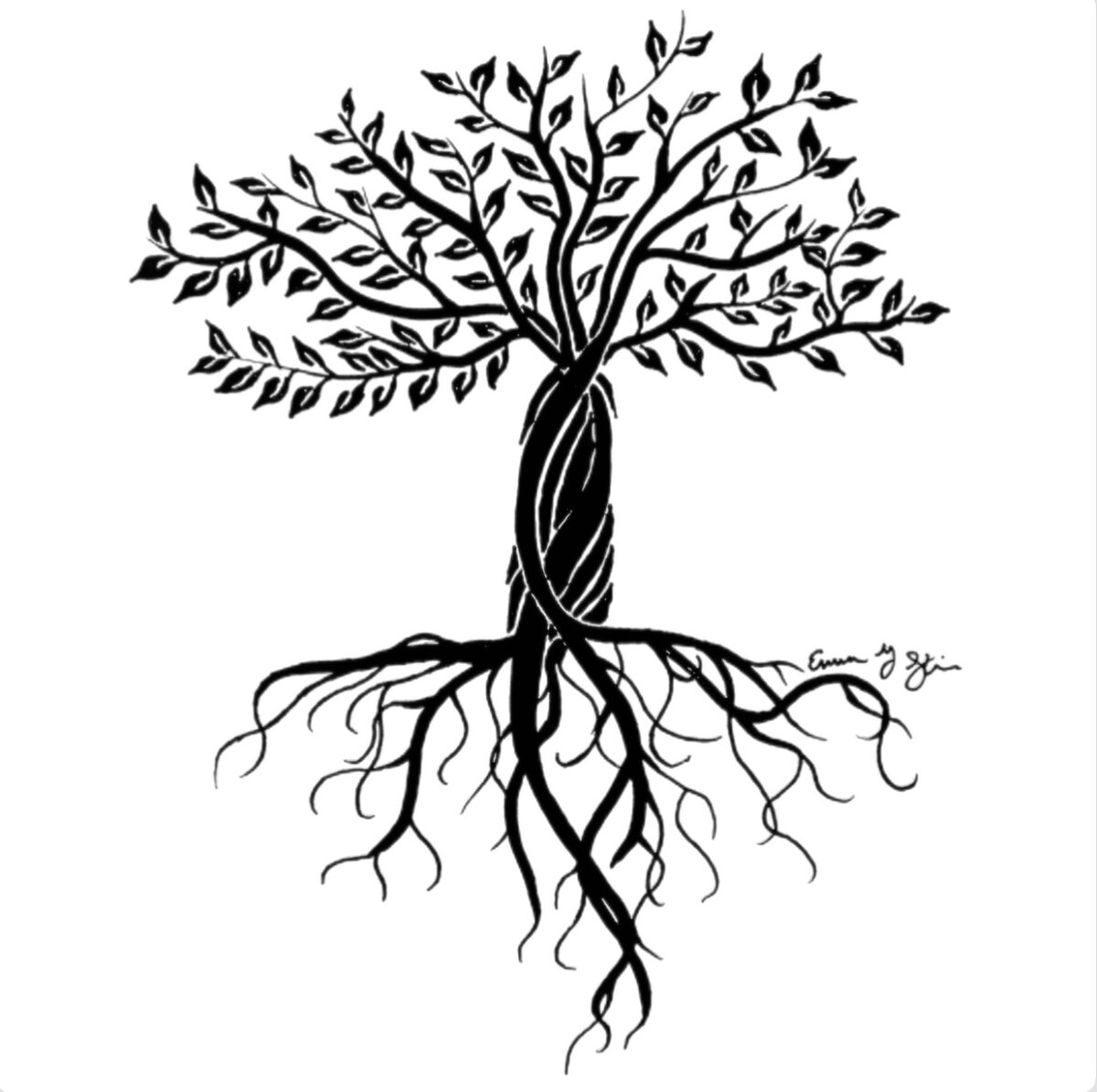
Dec Tree of Life e1702995075655

Our focus for the month of December is Journey, and the plant/flower is the Tree of Life. The Tree of Life has been used across cultures and religions to symbolize various aspects of existence, growth, and interconnectedness. When viewed as a representation of one’s personal journey, the Tree of Life can carry profound meaning in the journey of loss. Consider the symbolism below to help with the acceptance, adjustment, the process of pain, and the enduring connection with the deceased while embarking on your new identity. I was no longer a daughter, but the journey taught me that it is okay.

  • The roots of a tree symbolize your foundation, roots, and origin. Reflecting on your past, heritage, and experiences provides a strong base for growth.
  • The trunk of the tree represents your strength and resilience. Just as a tree withstands the forces of nature, you too can endure challenges and setbacks, growing stronger in the process.
  • The branches represent the different paths and choices in your life. Each decision you make leads to a new branch, shaping your journey in unique ways.
  • The leaves symbolize personal growth and transformation. Just as leaves change with the seasons, you undergo continuous growth and adaptation to the changing circumstances in your life.
  • The fruits of the tree symbolize your achievements and contributions. These could be the positive outcomes and impacts resulting from your efforts and actions.
  • The branches, leaves, and roots illustrate the interconnectedness of your life. Relationships, experiences, and choices are intertwined, creating a holistic and meaningful journey.
  • The cycle of seasons in a tree’s life mirrors the different phases you go through—spring for new beginnings, summer for growth, fall for reflection, and winter for rest and rejuvenation.
  • Trees adapt to changing conditions, bending with the wind. Similarly, your ability to adapt and be flexible in the face of change contributes to your personal growth.
  • Like a tree needs care and nourishment, your journey requires self-care and reflection. Taking the time to nurture your mind, body, and spirit ensures a healthier and more fulfilling life.
  • The shade of a tree represents your capacity to provide support and shelter for others. Your journey involves not only personal growth but also contributing positively to the well-being of those around you.
  • Trees experience cycles of renewal through the shedding of old leaves and the growth of new ones. Similarly, your journey involves continuous learning and renewal, letting go of what no longer serves you and embracing new opportunities.
  • The unity of roots, trunk, branches, and leaves signifies the connection between your mind and heart. Integrating your thoughts and emotions leads to a more balanced and harmonious journey.

By visualizing your grief as a Tree of Life, you can gain a deeper understanding of your experiences, challenges, and growth. It serves as a powerful symbol to connect with the natural processes of life and find meaning in the journey.

No one wants to face loss, but death is an integral part of our journey. When this occurs, the plan for our journey may need to be adjusted – stay flexible and open to new possibilities. And remember, bravery doesn’t mean the absence of fear; it means facing your fears and moving forward despite them. Each step you take, no matter how small, is a victory in itself.

At Hope Grows, we support those grieving a loss. If you are struggling, reach out to connect. Call us at 412.369.4673 or email [email protected]. Consider joining one of our classes in “The Joyful Grief & Loss Series.” Our first gathering, “Grief & The Box,” will be Saturday, January 20 – click here to learn more and to register.

Written by Lisa Story, MSCP, LPC, CT
Hope Grows Founder & Clinical Director
Notes from the Garden: The Tree of Life

December Plant of the Month: Tree of Life

doTERRA Essential Oil of the Month: Clary Sage

If we surrendered to the earth’s intelligence, we could rise up rooted, like trees. – Rainer Maria Rilke

The Tree of Life has been a sacred symbol, revered across cultures and religions, for thousands of years. Almost every major civilization and faith over the ages has had some level of sacred regard for the trees. 

While researching this blog, I found Tree of Life symbolism throughout Egyptian, Celtic, Mayan, Native American, Buddhist, Hindu, African, Greek and Roman mythology, and folklore. In the Bible, the Tree of Life is planted centrally in the Garden of Eden, near the Tree of the Knowledge of Good and Evil. In fact, the Hebrew phrase etz hachayim, meaning “Tree of Life,” has been used to refer directly to the Torah, Jewish sacred scripture. Proverbs 3:18 likens it to wisdom, saying one can derive happiness from holding onto her. 

The Tree of Life symbolizes healing, power, strength, and the cycle of life, death, and rebirth. Her roots extend downward, spreading their tendrils beneath the ground, and her branches reach up, interwoven, into the heavens. She occupies two worlds, symbolizing the harmonious connection between the divine and earthly realms. She is often encased in a surrounding circle, symbolizing the oneness and unity of all life. 

One of my personal favorite renderings is the Celtic Tree of Life. The Celts considered trees to be sacred repositories of memory, folklore, and the presence of spirit beings. Their Tree of Life symbol has its roots and branches intertwining and knotted together infinitely, with no beginning or end, symbolizing all of us inextricably connected within the Tree of Life’s protective stature. 

Wisdom is in the trees. Acting as both givers and sustainers of life, trees provide us with gifts of nurturance. From cradle to grave, we rely on them for our very breath, shelter, shade, medicine, music, healing, fire, and food. Whenever I have faced periods of struggle, or illness, I find solace among the trees. During a particularly difficult time years ago, it was the trees who taught me how powerful and restorative it can be to connect with nature. Walking among them day after day, their magnificent and healing spirits tended to me, making me feel safe, restoring my spirit, lifting me up to higher ground. It was within their loving embrace that I first felt the invisible connective tissue of the web of life all around me, cradling and connecting me to an intelligence far greater than mine. I was no longer a party of one; they connected me back to the infinite whole. They are my trees of life. I didn’t leave Pittsburgh much during that time, but looking back, I can see now I was on one of the most definitive journeys of my life. 

Journeys of adversity, healing, and wholeness ripen us, and often shake us to our core. They strip away what isn’t real and leave us clinging to what is. They make us human, and the most profound ones will reveal our humbling connection to all that is. I have been a care recipient, and I have a feeling I will be a caregiver before my life is over. What the trees have taught me is that even though these two souls walk hand in hand, experiencing two very different journeys, both are being held in the sacred boughs of a larger whole, to which they will forever belong. 

Written by Jessica Giannotta, Hope Grows Horticulturist

Tree of Life drawing by Emma Stair

Gladness

Thank you for joining us this November month of 2023 as we celebrated caregivers during National Family Caregivers Month and our Hope Grows 8th Annual Celebrating YOU! event, our 7th Annual Bob Evans Turkey Meal Deliveries, and Gladness, our Focus of the Month!

This month, we talked about the importance of “taking a break” and shared ways to do this in “just 10 minutes.” I was able to be a witness of a common theme of “gladness” in the air at our events, as everyone began to experience “rest” and “connection” with each other.

How suitable that the famous quote “there are only four kinds of people in the world: those that have been caregivers, those that are caregivers, those who will be caregivers, and those who will need caregivers,” is being widely circulated this month.

If you follow any movement of advocacy for caregivers, you are familiar with Rosalyn Carter, God rest her soul. The former first lady, founder of the Rosalynn Carter Institute for Caregivers died on November 19. She established the institute in 1987, to promote the health, strength, and resilience of America’s 53 million family caregivers. I think we can all be glad and express thanks and appreciation for her work.

“Being thankful is the quickest path to joy,” said Jefferson Bethke, a best-selling author of Take Back Your Family and Jesus, Religion and It’s Not What You Think. Thankfulness and joyfulness is at the root of gladness. The dictionary tells us that gladness is a type of happiness, an emotion one experiences when in a state of well-being.

So, why are we not in this state of well-being all of the time? Easy! Stress! It is a fluent part of our daily lives and impacts our emotions; it just isn’t possible to maintain a constant state of happiness. Is that okay? I think so. This is why healthy coping mechanisms are crucial and cultivating a balance in life is an important practice.

For those that know me, I am the grandmother to 8 beautiful human beings. Watching their growth from a perspective of a seasoned mother and a mental health therapist has truly become a constant state of behavioral observation. Of the 8 children, two of them are girls, and I am and have been a witness to my 6- and 13-year-old granddaughters, both in very different development and emotional states. Nonetheless, they both live with a constant ebb and flow between happiness (gladness) and a state of, what I call “childhood hysteria.” This frenzy is normal and what I see them doing is coping appropriately. Their parents have given them the tools to bounce back into a state of gladness (happiness, if you will) when stress or something doesn’t go, in their mind, correctly.

Gladness, or the feeling of happiness and joy, can have significant positive psychological effects on stress. When you experience gladness, it often counteracts the impact of stress in several ways. Reduction in stress hormones, improved resilience, and a positive mindset are just a few.

Healthy coping mechanisms are a form of mindfulness, exercise, social support, and problem-solving skills. I truly believe though, for my two granddaughters, part of the success is they just don’t stay in an unpleasant emotion for too long. As most children, they can bounce from the stressful unpleasant moment quickly, if given the right environment.

Stress is a natural part of life, and the key to managing it effectively is by finding a balance between the stress and gladness. Our Hope Grows Care Model includes ways to find that balance and, in that moment, I believe is a place of equilibrium where we find a more empowered, fulfilled, and resilient person, which then reinforces the reason to be in this state of well-being.

Our state of mind is so full of emotions, why wouldn’t we want to feel more than just gladness all of the time? After all, an unpleasant emotion often can lead to change. If I didn’t experience sadness, Hope Grows may not exist. The mission grew from sadness and grief; good things can happen when we experience unpleasant emotions. The important part is knowing how to cope: “take a break” daily and don’t linger in the unpleasant for too long.

So, go into the last month of the 2023 with the thought of cultivating gladness, as it can create a ripple effect of positivity. Some suggestions are to laugh and smile (even when it’s hard to), seek learning and growth, positive self-talk, acts of kindness, engage in activities you enjoy, and implement a gratitude practice. Practicing gratitude and almsgiving changes our brain chemistry. More on that later, but what a great month to give of yourself and let the world know how glad you are to express YOU through giving. The return is worth it…A Glad and Joyful Heart.

Happy Thanksgiving!

Written by Lisa Story, MSCP, LPC, CT
Hope Grows Founder & Clinical Director