Integration

Gathering What We Have Learned

I write about nature often. I write about walking through the gardens, putting our hands in the soil, noticing the changing light, listening to the birds, and allowing the natural world to remind us to slow down. At Hope Grows, we have witnessed repeatedly how nature can become a place of respite, reflection, and healing.

But for some reason, this month has caused me to think differently about the very thing I so often describe as restorative: nature can also be unpredictable and powerful. Recent natural disasters remind us how quickly familiar landscapes—and lives—can change. As our clinical team continues its training in trauma and grief, I find myself thinking about those whose sense of safety has been altered in an instant.

Sometimes, nature doesn’t feel safe.

How do we reconcile that?  Perhaps that is part of what integration asks of us.

Integration isn’t pretending that everything fits neatly together. It isn’t finding the positive in every painful experience. Sometimes it means allowing two things to be true at once.

  • Nature can comfort us, and nature can frighten us.
  • We can trust, and we can ask questions.
  • We can be grateful for what nourishes us while becoming more thoughtful about where that nourishment comes from.

Even something as ordinary as buying a peach can remind us of this. Several times this summer, I brought home beautiful peaches. They looked nearly perfect on the outside. I waited for them to ripen, anticipating that wonderful first bite, only to cut them open and find them bruised, mushy, or simply not what I expected. It’s a small disappointment in a world carrying much larger ones. Yet it made me think about appearances, expectations, and trust.

How often do we assume that because something looks good on the outside, everything underneath must be okay? People do this, too. Families do it. Organizations and systems do it. Sometimes even our own lives do it.

Integration invites us to look beneath the surface. Not with fear, but with wisdom.

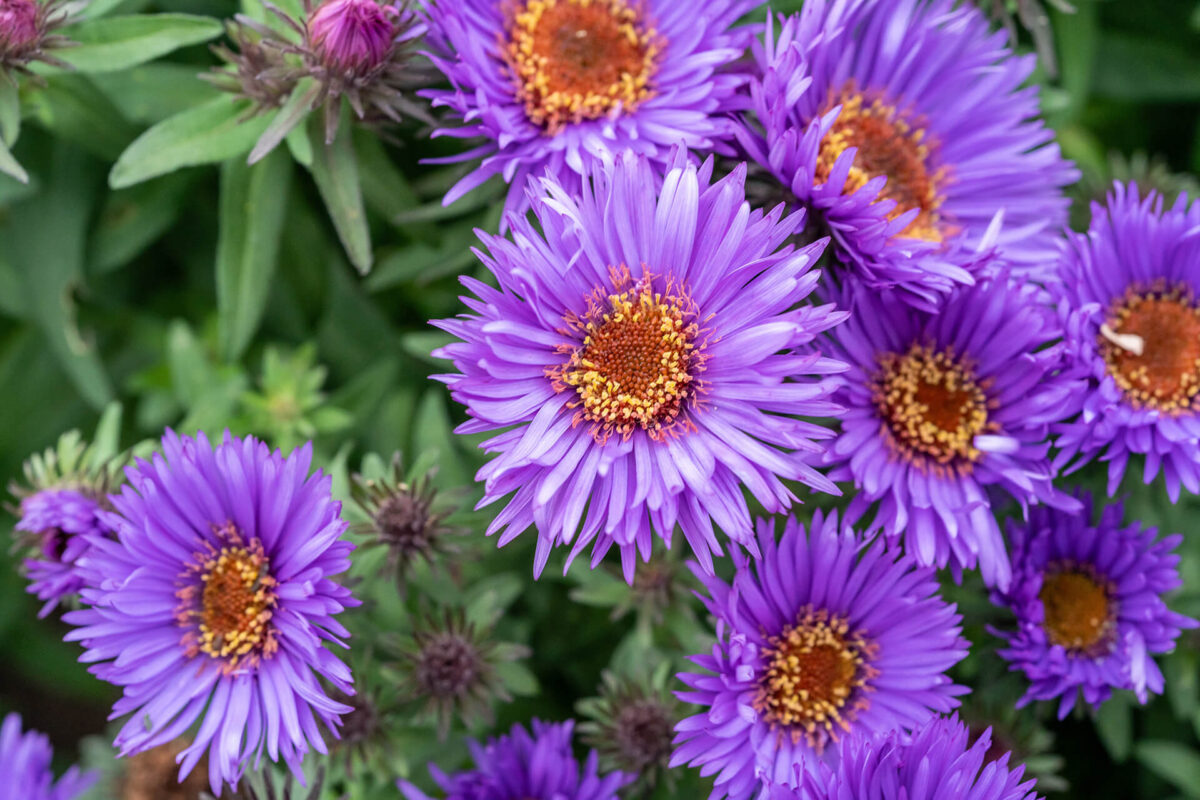
September’s flower, the aster, arrives as summer begins surrendering to fall. It blooms at a threshold, reminding us that beauty doesn’t belong to only one season of life. Our essential oil this month, cedarwood, carries an equally fitting symbolism: grounding, steadiness, and roots.

Maybe September isn’t asking us to escape the unsettling things happening around us. Maybe it is asking us to become more rooted while acknowledging them.

  • To gather the lessons.
  • To recognize what has changed us.
  • To question what deserves questioning.
  • To hold gratitude without using it to silence grief.

And to understand that being grounded does not mean being untouched by what is happening in the world.

For caregivers and those grieving a loss, this may be especially important. Life can change our understanding of what is safe, predictable, and trustworthy. A diagnosis, a death, a disaster, or an unexpected phone call can divide life into before and after. Integration is the slow work of bringing those pieces back into relationship with one another.

Not returning to who we were before. Not pretending the difficult parts didn’t happen. But gathering what we have learned and allowing it to become part of who we are becoming.

As the asters bloom and the season begins to turn, perhaps September offers us a different invitation from nature: Don’t ask me to always be gentle. Let me teach you how to be rooted.

Written by Lisa Story, MSCP, LPC, CT
Hope Grows Founder & Director

Where nature heals the heart.

Cedarwood graphic

September Focus: Integration

Essential Oil: Cedarwood

Flower: Aster

At Hope Grows, we believe healing happens when we create space for both grief and growth. Through counseling, support groups, respite opportunities, and programs such as The Gathering Table, we invite caregivers and those grieving a loss to share their stories, find connection, and discover moments of restoration along the way. Call us at 412.369.4673 or email intake@hopegrows.org.

Disclaimer: This site offers information designed for educational purposes only. You should not rely on any information on this site as a substitute for professional medical advice, diagnosis, treatment, or as a substitute for professional counseling care, advice, diagnosis, or treatment. If you have any concerns or questions about your health, you should always consult with a physician or other healthcare professional.


Stewardship of Energy

Things We Never Really Own

There is an uncomfortable truth that nature quietly teaches us: nothing truly belongs to us. Not the towering oak that shades the garden, not the changing seasons that arrive without our permission, not even the breath we are taking at this very moment. For a time, we are simply entrusted with them.

During my years as a hospice spiritual counselor, I came to understand something that no textbook could have taught me. No matter how much time I spent talking with someone or quietly sitting beside them, I could not save them. I could comfort the soul while disease continued its course. Nurses cared faithfully for bodies that continued to weaken. None of us could stop death. What we could do was accompany another human being with dignity, presence, and love.

Accepting this truth was heartbreaking. Yet, over time, it became strangely liberating. Looking back, I realized this was a profound stewardship of energy. Our purpose was never to control life. Our purpose was to bear witness to it.

There is something deeply sacred about sitting beside another person in their vulnerability. Holding a hand. Preparing a meal. Listening to the same story for the tenth time because it still matters to the one telling it. These moments rarely change the outcome. They change us.

Perhaps that is the deeper work of caregiving.

The philosopher Martin Buber wrote that life is found in relationships. We become ourselves not in isolation, but in genuine encounters with one another. Grief reveals this truth with startling clarity. When someone dies, we discover that love has never been measured by the number of days we shared, but by the ways one’s life continues to shape our own.

Spend even a few moments in the gathering spaces of a funeral home, and you notice something remarkable. Families rarely begin by talking about careers, awards, or accomplishments. Instead, you hear things like: “She made everyone feel like family,” “He taught me how to forgive,” “She listened without trying to fix me,” and “He always showed up.” These are the stories that remain. They remind us of a life measured less by what we accumulated than by what we cultivated in others.

This is why grief asks something different from us than simply “moving on.” It asks us to become good stewards of the energy that remains. That energy can be found in the stories, the traditions, the values, the laughter we can still hear, the recipes written in familiar handwriting, and the lessons learned through ordinary days that no longer feel ordinary.

These reflections have become the heartbeat of the Hope Grows’ Gathering Table. The Legacy Project invites caregivers and those who are grieving to share their stories. I am continually reminded that storytelling is far more than therapy. It is one of humanity’s oldest spiritual practices. Stories answer perhaps the deepest question we ask near the end of life: “Will this life be remembered?”

Legacy is carried forward in quiet moments that no one else notices. Legacy lives in quiet acts of listening, comforting, mentoring, and compassion. It is also about “what we cultivate in others.” Legacy is not what we leave behind; it is what continues to grow in the lives of others because we experience something.

Nature has always understood what we struggle to accept, that endings and beginnings often occupy the same space. A tree does not cling to its leaves when autumn arrives. It releases them, not because they were unimportant, but because letting go is part of making room for what comes next. The leaves become nourishment for the very ground that will sustain future growth.

Perhaps our lives are meant to unfold in much the same way. Bearing witness, is itself, an act of stewardship. When we truly witness another person’s suffering, another person’s joy, or a life well-lived, we become responsible for carrying some part of that story forward.

That’s what the Legacy Project is doing.

That’s what caregivers do.

That’s what grief eventually asks of us.

In the end, stewardship has never been about owning anything at all. It has always been about faithfully caring for what was entrusted to us, knowing that one day we will place it gently back in the hands of time. Perhaps, maybe that is the invitation August quietly offers us. Not to ask how much more we can do. But to ask what has been entrusted to us and how we will care for it while it is still in our hands.

Written by Lisa Story, MSCP, LPC, CT
Hope Grows Founder & Director

August Focus: Stewardship of Energy
Essential Oil: Bergamot
Flower: Calendula

At Hope Grows, we believe healing happens when we create space for both grief and growth. Through counseling, support groups, respite opportunities, and programs such as The Gathering Table, we invite caregivers and those grieving a loss to share their stories, find connection, and discover moments of restoration along the way. Call us at 412.369.4673 or email intake@hopegrows.org.

Disclaimer: This site offers information designed for educational purposes only. You should not rely on any information on this site as a substitute for professional medical advice, diagnosis, treatment, or as a substitute for professional counseling care, advice, diagnosis, or treatment. If you have any concerns or questions about your health, you should always consult with a physician or other healthcare professional.
Resilience & Vitality

Turning Toward the Light While Remaining Rooted

This July carries special significance as our nation celebrates 250 years of independence. Celebrations of fireworks and festivities inspired but so did reflection. I pondered a bit about the history of our country and in many ways, thought of resilience became the focus. Our history reflects people that navigated uncertainty, rebuilt after hardship, cared for one another through war, illness, economic struggle, and personal loss. Long before there were formal support services, there were family caregivers tending to aging parents, neighbors bringing meals, communities gathering around those who were grieving, and generations finding ways to move forward while carrying the memories of those they loved.

Today is no different. That same spirit continues. Every caregiver who rises before dawn to help a loved one begin another day demonstrates resilience. Every person navigating the unfamiliar landscape of grief while continuing to show up for family, work, or community embodies quiet vitality. These stories may never appear in history books, yet they form the foundation upon which families and ultimately communities are built.

Perhaps resilience is not simply about “being strong.” Maybe it is found in allowing ourselves to be human, in asking for help when we need it, resting without guilt, finding laughter in the heavy and accepting that healing rarely follows a straight path. Like the sunflower, resilience is less about standing unmoved through every storm and more about staying rooted enough to bend, recover, and continue reaching toward the light.

In much the same way, vitality may look different than we expect. It is not always found in endless energy or constant productivity. It can be found in the quiet moments that restore us, such as a meaningful conversation, time spent in nature, a nourishing meal, sharing a story, or finding room for joy even while carrying sorrow. These small moments of care gently remind us that we are still growing, still healing, and that our lives continue to offer hope to others.

At Hope Grows, we believe resilience is cultivated in relationships. Whether through counseling, support groups, the Gathering Table (Grief Soup gatherings, Caregiver2Caregiver mentoring, and the Legacy Project), or simply putting a head on a pillow at the Iris Respite House or walking through the healing gardens together, healing happens when people discover they do not have to carry life’s burdens alone. Every story shared strengthens not only the individual but the community around them.

As we commemorate 250 years of our nation’s journey, perhaps take the time to ponder a few things about what the 250th anniversary of our country invites us to consider. One of the greatest tributes we can offer is to continue caring for one another. Every family caregiver who sits beside a hospital bed, every neighbor who delivers a meal, every volunteer who offers a listening ear, and every person who walks alongside someone in grief strengthens the fabric of our community. Our country’s future will not be measured solely by its accomplishments, but by how faithfully we support those who are vulnerable, honor those who came before us, and invest in those who will come after us.

The Hope Grows legacy asks us to share just that.

Written by Lisa Story, MSCP, LPC, CT
Hope Grows Founder & Director

  • Essential Oil: Melaleuca (Tea Tree)
  • Flower: Sunflower

At Hope Grows, we believe healing happens when we create space for both grief and growth. Through counseling, support groups, respite opportunities, and programs such as The Gathering Table & Legacy Initiative – Grief Soup, we invite caregivers and those grieving a loss to share their stories, find connection, and discover moments of restoration along the way. Call us at 412.369.4673 or email intake@hopegrows.org.

Disclaimer: This site offers information designed for educational purposes only. You should not rely on any information on this site as a substitute for professional medical advice, diagnosis, treatment, or as a substitute for professional counseling care, advice, diagnosis, or treatment. If you have any concerns or questions about your health, you should always consult with a physician or other healthcare professional.

Category: Emotions and CopingGrievingMindfulness and UnderstandingSelf Care

Tag: coping with lossgriefloss

Appreciation

I woke the other day to a beautiful heavy snow. It happened to be on a Saturday, so my morning was a bit more relaxed. The picture from the sunroom window, here at the Iris Respite House & Healing Gardens, was breathtaking. I stood there, looking out the window, mesmerized by the beauty. I felt gratitude and appreciation for what nature was providing. Quickly, the feeling left me as I moved my focus back to the long task list that I put together for the weekend of hopeful accomplishments. I expressed (out loud, I might add), “Why does my day have to be so full of ‘to-dos’?” The tasks on my list were important and needed to be done, but how can I slow down this weekend and appreciate something as soothing as this snowy morning? I wanted to just continue to stare, but thought, how unproductive.

Appreciation is the focus for the month of March. When stress and to-dos happen, self-sabotaging tendencies appear. While nature is one constant in our lives, it can help with appreciation and all the little things in life, but the busy-ness of the day seems to always get in the way. How can we appreciate the surprise of what is below an overturned rock, the transformation of a deciduous tree in the autumn season, the continuous flow of water from a rain storm, or the plant showing its beauty after a long cold winter season?

In this scenario, the moment of surprise was the snow. I know that nature’s rhythm is a reminder of resilience and renewal. We share and shout this message from Hope Grows quite often…blah, blah, blah! But how, even in the midst of stress and many to-do’s can these small moments of wonder anchor you in appreciation?

While the morning went on and I kept busy with the to-do’s, I noticed the snow turned to rain. I found myself drawn to the process of this particular element of nature, in the moment, as it switched from snow to rain. Something happened that I haven’t felt in a while. I was inspired, almost awe-struck at the grounding this change in weather created. I took a moment and just watched, even opened the door to breathe in the scent it was bringing. I watched it move across the window. Even in those few seconds of noticing, I felt a small act of appreciation amidst the busyness of my morning.

As the day continued to unfold, the weather changed several times from rain to snow, back to rain, and then snow again. In fact, the entire weekend’s weather did this; it kept flip-flopping, as if it switched to the rhythm of my endless list. I found myself noticing small acts of appreciation throughout the weekend, gently shifting my awareness from the busy weekend to what was happening outside my window and then back again. I was super excited at the end of the weekend, as it had been one of the most productive weekends in task completion that I have had in a long time. Was it the small acts of appreciation of nature I kept engaging with or was it just pure coincidence? I don’t know, but what I do know is the way I chose to engage perhaps made the difference. Consider trying the following:

  • I Paused – for just a few seconds, I took a break from the rush of my to-do’s. It wasn’t a long break; it was just enough to acknowledge the moment.
  • I Observed – I tuned into my surroundings. I noticed what was happening in the here and now of nature, in my environment, and even within myself. I took mind of the way the snow looked, how the rain sounded, the scent from the door, and in the filling of my lungs with the air.
  • I Acknowledged – Internally, I took notice. I even made comments out loud. “Look how large those snowflakes are!” “Oh wow, it now turned to rain.” “The scent of the air outside is intriguing.” “It’s snowing again, this is beautiful.” I expressed gratitude for the beauty before returning to my tasks.
  • I Felt – I allowed myself to experience a sense of gratitude, wonder, and connection, even if it was for a brief moment. It seemed to reinforce the habit of appreciation as I kept looking out the window between tasks.
  • I Returned – I went back to my tasks, but continued to carry out the moment of noticing and appreciating. I kept setting an intention to notice one more “smaller” thing out the window as the day went on. I was excited to wake the next day of the weekend and continue with my tasks; I found I didn’t dread the remaining to-do’s and ended up feeling so accomplished.

As the weekend came to a close, I realized that appreciation doesn’t need to be grand. It can be woven into the smallest of moments. I think the process became more intuitive as I kept noticing what was happening to me and outside. Despite the many tasks on my list, I felt rested, relaxed and restored, and accomplished.

With a mission to inspire hope through nature while empowering family caregivers to seek wellness of mind, body, and spirit, we focus on resting, relaxing and restoring as a way to appreciate life. This acknowledges both the challenges caregivers face and the power of nature in fostering well-being. Rest, relaxation, and restoration are not just luxuries but essential parts of sustaining appreciation and resilience.

By taking mindful moments, such as the above, becomes a way to embrace and encourage one to “take a break.” This process instills appreciation. At Hope Grows, we incorporate and encourage others by gratitude practice, mindful techniques, use of healing gardens, the language of flowers, bird watching, connecting to nature, aromatherapy, and labyrinths…to name a few. This beautiful holistic approach weaves together mindfulness, nature, and sensory experiences. Each of these practices offers a unique way to slow down and connect—whether through the symbolism of a labyrinth, the stillness of bird watching, or the grounding presence of a healing garden.

The next time your list has many to-do’s on it, try to appreciate the beauty outside the window in small moments of time throughout your day. You just might feel rested, relaxed, and restored in your busy-ness and have a new found sense of appreciation.

In appreciation of all of you!

Lisa Story, MSCP, LPC, CT
Founder & Clinical Director

Tenacity

January’s focus is about tenacity, with Clematis as our flower pick and Laurel Leaf as the essential oil. Tenacity, by definition, is persistence, with some synonyms including courage, mettle, resolution, and spirit. I believe that spirit and tenacity largely overlap, with spirit suggesting a quality of temperament enabling one to hold one’s own or keep up morale when opposition is threatened.

Wow, that is a mouthful! But it brings me to a time shortly after the death of my dad. I found myself in therapy for the heaviness of grief and, in sharing my narrative and struggles, the therapist asked if I had always been this tenacious. I had to laugh as I pondered the question. I never considered myself to be stubborn, as one of the synonyms suggests. I may be adamant at times, a true natural inheritance of DNA, and definitely strong willed, but never stubborn.

I’m comfortable sharing as I believe to fit the description of a determined spirit that does not give up easily. This has served me well in my life; even as a child, it brought me closely connected to nature and most comfortable in the forest. As John Muir put it best, “Into the forest I go, to lose my mind and find my soul.” In the woods or forest, I am at peace, a soulful energy comes alive and, as some have described me, a force with which to be reckoned.

Enough about my connections to self and nature – let’s consider how YOU can connect to help with your tenacious spiritual side. One way would be to consider our essential oil pick for the month, Laurel Leaf. Its healing properties are antibacterial and antiviral, and its top uses are for viruses, cold and flu, congestion, cough, and pneumonia. If used for emotional balance, it can help one go from self-sabotage to a victorious feeling. A great spiritual energy as well, it connects us to our soul and has long been associated with purging and clearing. Is not winter a time for being inside? Not just inside our brick-and-mortar protection from the cold and wind, but to go inward to the depths of our soul and ponder over what to purge, clean out or clear, and make room?

Another way to bring more tenacity into your life is the Clematis plant. It symbolizes tenacity and adaptability, rooted in its growth patterns and characteristics. This vine-like plant is known for its ability to climb and thrive in diverse conditions, reaching for light and support with determination. Its delicate-looking flowers contradict the strength and persistence required to flourish in often challenging environments. By incorporating its imagery into your life, you might be inspired to persist through difficulties with elegance. Its essence is a reminder that tenacity often lies in the quiet, consistent pursuit of growth and light.

Regardless of how you decide to bring more tenacity into your month, consider the following.

  • Embrace the stillness that winter’s quiet offers and let it mirror the inner quiet needed for spiritual growth.
  • Learn from nature’s resilience and the lesson of endurance and renewal from the evergreens, snowdrops, and the cycle of dormancy.
  • Open to the stark beauty of winter. It creates a spiritual awareness of the sacredness of the frost patterns and the interplay of light and shadow.
  • Look inward and discover our own light during the long nights. We are called to reflect as it aligns us with self-awareness, inner strength and the divine spark within ourselves.

Spending time in winter landscapes brings us fully into the present moment. There is a mindful moment of breathing in the cold crisp air, walking in the snow, or even laying down and making a snow angel. No worries though, if you cannot go outside. Open your window and let some cold air come in, and then watch the birds, the flurry of the snow, or notice how the snow sits on the branch. The benefit is the same.

So, if you can, put on a coat/gloves/hat/boots and engage with nature! We not only will cultivate tenacity, but also nourish our souls. It is in this interplay between the external and the internal, the physical and the spiritual, that we discover the profound connections that ground us and uplift us through every season of life.

Lisa Story, MSCP, LPC, CT
Founder & Clinical Director

Flourish: Our Theme for 2025

Happy New Year! Hope Grows spent some time over the holiday season recharging and enjoying time with family. “Taking a Break” has been something that Hope Grows has incorporated into their work model since the founding. Practicing what we teach not only has helped us to continue to deliver our Model of Care at the top of our game, it helps us help caregivers flourish.

During this break, not only was connecting with family important, but connecting with nature was, too. As this time of the year marks the beginning of the changing season, I prefer to embrace it with excitement, not dread. Yes, winter is, for some, a time of trepidation. The freezing temps, snow and ice, and the darkness lend itself for an emotional storm. However, if we think about the positive of what winter can bring, our souls can flourish. John Muir so brilliantly put it, “Climb the mountains and get their good tidings.” Well, I wasn’t expecting anyone to climb a mountain over the break (I sure didn’t), but his message continues to say that if you get good tidings from the mountains, “nature’s peace will flow into you as sunshine flows into trees.” Then, “The winds will blow their freshness into you, and the storms their energy, while cares will drop off like autumn leaves.”

Perhaps if we look at winter as an increase in energy, we can begin to flourish. I believe that his message is about taking time, especially during the depths of winter, to allow the tenacity of nature and perhaps, winter, to help us flourish. To flourish is a beautiful and profoundly tenacious concept for reflection. To flourish in the darkness of winter, whether it’s the literal season or a symbolic period of challenge, requires resilience, adaptability, and inner strength. Embracing the cold, with a bit of steadfastness, can remind us that even in the most barren times, growth is possible, and life continues to find its way.

As the seasons of the year cycle through this year, consider the thought that flourishing can become a testament to our capacity for renewal and transformation. The goal is to not just find beauty and purpose in the coldest moments, but throughout the year as well.

To flourish spiritually means nurturing the seeds of hope, love, and faith within, even in times of stillness or challenge. It encourages us to trust the process, to be present with what is, and to cultivate gratitude for the subtle growth that often goes unseen. Reflect and consider how you would like to embody this flourishing spirit as you journey through winter and each new season in 2025.

Happiest in Nature!

Lisa Story, MSCP, LPC, CT
Founder & Clinical Director